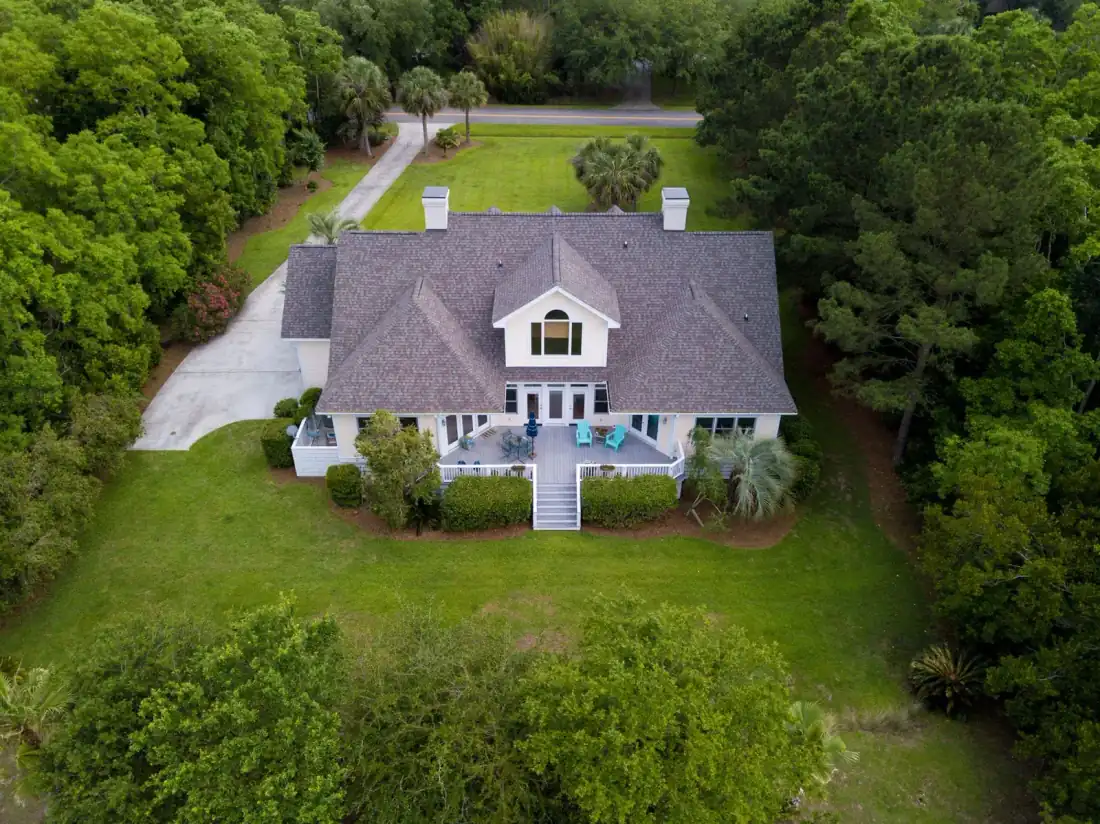
General Contractor in Florida
Call (352) 710-5455What a general contractor is actually responsible for in Florida
A general contractor is the single party legally accountable for an entire build. Not one trade — all of them. That means pulling the permit under a licensed qualifier, hiring and paying subcontractors, sequencing the work so inspections happen in the right order, and answering for corrections when the building department writes them up.
Homeowners usually learn what that means the hard way. When a project is assembled trade by trade to save money, nobody owns the seams between them. The framer leaves an opening the window installer cannot flash correctly. The drywall goes up before the inspector has signed off on the structural connectors, and now it comes back down. Tile gets set over a slab nobody checked for moisture. Each trade did its own part correctly. The house still fails.
On a Florida project those seams carry more weight than in most states, because more of the building is engineered against wind and water rather than just assembled. Roof-to-wall connections, opening protection, flashing details, fastener schedules and approved products all have to be documented as well as installed. Missing paperwork stalls a certificate of occupancy just as effectively as missing work does.
Protech Construction Services LLC runs jobs as contractor of record from our Florida office at 9035 Jayson Dr, Brooksville, FL 34613. One contract, one schedule, one number to call at (352) 710-5455, and one company that owns the outcome. We are rated 5 on Google — which we mention mainly because verifying that is something you should be doing for anyone you are about to hand a permit-level scope of work.
How Florida licenses contractors, and how to check yours
Construction contracting in Florida is governed by Chapter 489 of the Florida Statutes and licensed by the Construction Industry Licensing Board, which sits under the Department of Business and Professional Regulation (DBPR). That structure matters to you because it gives you a public, primary source to check a contractor against before you sign anything.
There are two license types, and the difference is worth understanding. A certified contractor has passed the state examination and can work anywhere in Florida. A registered contractor is limited to the specific local jurisdictions where they hold a certificate of competency. Both are legitimate. But if a contractor is registered rather than certified, their ability to work legally on your project depends on where your project is — and that is the kind of thing worth confirming before demolition day, not after.
Insurance is not just good practice in Florida, it is a statutory condition of holding the license. Section 489.115(5)(a) requires a license applicant to submit an affidavit showing workers' compensation coverage under Chapter 440, public liability coverage, and property damage coverage, in amounts set by board rule. Ask for certificates naming your project, and ask that they come directly from the insurance agency rather than as a forwarded PDF.
The practical checklist is short. Look the license up yourself through DBPR's public records search. Confirm the status is active. Confirm the name on the license is the same legal entity that appears on your contract — not a similar-sounding name, not a parent company, not a salesperson's separate business. Confirm insurance independently. A contractor who is annoyed by any of that is telling you something useful.
The code edition your project will actually be built to
Florida is unusual in having a single statewide building code rather than a patchwork of local codes. The edition currently in force is the Florida Building Code, 8th Edition (2023), effective since December 31, 2023. When a contractor says a job is "built to code" in Florida, that is the document they mean.
The next edition is already moving. The 9th Edition (2026) has been published for review and is expected to take effect around December 31, 2026, reflecting the six-month buffer between publication and effective date required by section 553.73(7)(e) of the Florida Statutes. That gap exists so designers, contractors and building officials can adjust before the new requirements are enforced.
Why should a homeowner care about a code cycle? Because it changes what a plan set has to show, and outdated details are one of the quieter causes of delay. Drawings assembled from an older edition come back from plan review with comments. Comments mean revisions, revisions mean resubmittal, and resubmittal means the job has not started while you are still paying for it. A contractor who is current on the code produces a set that clears review on fewer passes.
It also changes what you own afterward. Structural connections, opening protection and envelope details built to the current edition are documented in a way that supports permits, appraisals, resale and insurance conversations later. Building down to an older standard saves nothing you can point to and costs you paperwork you cannot recreate. On our projects the code edition is not a marketing line — it is what the plans are drawn against and what the inspector measures against.
Wind requirements change across Florida — and they change by address
This is the single most misunderstood thing about building in Florida. The code is statewide, but the wind requirements inside it are not uniform. Two houses in the same county can face different obligations.
At the strictest end sits the High Velocity Hurricane Zone (HVHZ), defined in Sections 1616 through 1626 of the Florida Building Code. The HVHZ covers exactly two counties — Miami-Dade and Broward — and nothing else. Inside it, structural requirements are more demanding and products must pass the TAS 201, 202 and 203 impact and pressure test protocols. If someone quotes you "HVHZ-rated" work outside those two counties, they are selling a label, not a requirement.
Separately, and covering far more of the state, is the Wind-Borne Debris Region. An area falls inside it where the ultimate design wind speed is 140 mph or greater, or where it sits within one mile of the coastal mean high water line with a design wind speed of 130 mph or greater. Inside that region, openings must be protected — impact-rated windows and doors, or approved shutters and panels. Outside it, that protection is an upgrade you may still want, but it is not something the code forces.
The consequence for you is procedural, not theoretical. Whether your address is in the wind-borne debris region is determined by the official wind speed mapping for that specific location, not by a county name and not by what the neighbor's contractor did three years ago. We verify it by address before scoping openings, because guessing in either direction is expensive: guess low and the job fails inspection, guess high and you pay for impact glass the code never asked for.
Storm damage, roofs, and the 25% rule people get wrong
Ask around after any bad storm season and you will hear that Florida makes you replace an entire roof if a quarter of it is damaged. That was closer to true once. It is not the current rule, and the difference is worth real money.
The provision now lives in section 553.844 of the Florida Statutes, as amended by SB 4-D, effective May 26, 2022. Here is what it says in plain terms: if the roof system or section was built or repaired in compliance with the 2007 Florida Building Code or any later edition, then when 25% or more of that system is repaired or replaced, only the repaired or replaced portion has to meet the current code. Not the whole roof. The statute also blocks local governments from changing that exception by ordinance, so the answer does not shift when you cross a city line.
The practical question becomes a documentation question. What edition was the existing roof system built to, and can that be established? That single fact can decide whether a claim covers a section repair or an entire replacement, so it belongs in the conversation early — before the tear-off, before the adjuster's scope is finalized.
Storm work also tends to arrive with hidden scope attached. Water that entered at a roof penetration rarely stops there. It moves along framing, soaks sheathing and insulation, and shows up as a stain on a ceiling in a different room. Our storm damage restoration work is built around finding the actual path of the water rather than repairing the visible end of it, and documenting what we find while it is still open and photographable.
Insurance credits and state money for wind hardening
Structural work in Florida can pay you back through your insurance premium, and most homeowners never connect the two. Citizens Property Insurance Corporation, the state-backed insurer, uses the Uniform Mitigation Verification Inspection Form (OIR-B1-1802) to grant premium credits for wind mitigation features — roof deck attachment, roof-to-wall connections, opening protection, reinforced garage doors and similar items. A revised version of that form, Rev. 04/26, took effect on April 1, 2026 for inspections performed on or after that date.
Read that in reverse and it becomes a planning tool. If specific features earn credit on a specific form, then knowing which features your home already has — and which it is one upgrade away from having — should inform what you scope, not be discovered afterward. Getting the wind mitigation inspection before finalizing a hardening scope is simply better sequencing.
There is also state money in play. The My Safe Florida Home program, administered by the Florida Department of Financial Services under section 215.5586 of the Florida Statutes, offers a free wind mitigation inspection and, depending on income, a state matching grant of up to $2 for every $1 the homeowner spends on approved improvements, capped at $10,000. Low-income homeowners may receive up to $10,000 without the matching requirement. Program funding and application windows are set by the state, so check current availability directly at the program before counting on it.
Timing pulls all of this in one direction. The Atlantic hurricane season runs June 1 through November 30, a window that contains roughly 97% of all Atlantic hurricanes. Work that opens a roof or an exterior wall is best finished before that window, not started inside it — and demand for that same work rises sharply once it opens.
What we build across Florida
Protech Construction Services is a general contractor, not a single-trade shop, and the range matters when a project turns out to be bigger than it looked. Here is the full scope we carry, with the detail for each on its own page.
- Custom Home Building — ground-up residential construction as contractor of record, from permitting through certificate of occupancy.
- Custom Home Floor Plans — plan development before construction, so the layout is resolved on paper rather than in framing.
- Home Remodeling — whole-house and multi-room renovation, including work that changes structure rather than just finishes.
- Kitchen Remodeling — layout, structural changes, mechanical and electrical rework, and finish installation.
- Bathroom Remodeling — the room where waterproofing and substrate preparation decide whether the result lasts.
- Home Additions — added square footage tied into existing foundation, framing, roof and envelope, permitted as new construction.
- Patio Construction — covered and open outdoor structures, where attachment details and wind loading are the engineering question.
- Custom Cabinets — cabinetry built to the room's actual dimensions instead of forcing a room to fit stock sizes.
- Storm Damage Restoration — repair and rebuild after wind and water events, documented for the insurance conversation.
- Construction Management — schedule, trade coordination, inspections and cost control on projects that need a manager more than a builder.
Most real projects cross several of these. An addition brings in floor plans, structure, and often a kitchen or bath. Storm damage that opened a roof frequently becomes a remodel by the time the affected rooms are put back. Carrying the full scope means the answer to "that turned out to be bigger than we thought" is a change to our scope, not a search for a second contractor mid-job.
What actually drives cost and schedule on a Florida project
Two bids on the same house can be far apart without either one being dishonest. Knowing what moves the number lets you read bids instead of just comparing totals.
Structure moves it most. Finishes are visible and feel expensive, but moving a load-bearing wall, cutting a new opening in an exterior wall, or tying an addition into an existing roof line brings in engineering, different permits and different inspections. A cosmetic remodel and a structural one are not the same category of work even when they produce a similar-looking room.
Jurisdiction moves it. Florida's code is statewide, but permitting is local. Submittal requirements, review sequence and inspection scheduling vary between building departments, and that variance lands on the schedule rather than the materials list.
Existing conditions move it. On any renovation, real scope is partly unknown until walls are open. Slab moisture, previous unpermitted work, corroded connectors, or damage behind a finished surface all change the plan. An honest bid says which items are allowances and which are fixed, and says what happens when something is found. A bid that treats every unknown as zero is not cheaper — it is just unfinished.
Product selection and approvals move it. Impact-rated openings, specific structural connectors and approved assemblies carry their own availability. Selecting late is one of the most common self-inflicted delays in residential construction, and it is entirely avoidable.
Season moves it. Summer afternoon rain complicates any work with an open roof or open wall, and demand for exterior work climbs during and after hurricane season. Scheduling envelope work outside that window is usually the cheapest decision available to you, and it costs nothing but planning ahead.
Choosing a general contractor in Florida
Reduce the decision to things you can verify. Look the license up yourself in DBPR's public records rather than accepting a number on a business card, and confirm the license type covers your location. Get insurance certificates from the agency. Confirm the licensed entity is the entity on your contract.
Then read the contract for scope, not just price. It should name what is included, what is excluded, what is an allowance, how change orders are priced and approved, and how payments track completed milestones rather than a calendar. Be cautious about arrangements where you pull the permit yourself as an owner-builder to save a fee — doing so shifts responsibility for the work onto you, which is exactly the thing you were hiring a contractor to carry.
Ask process questions, because that is where experience shows. How will the wind requirements at this specific address be verified? What code edition are the drawings prepared against? Who calls inspections, and what happens if one fails? What gets documented, and when? Contractors who work in Florida constantly answer these quickly and without irritation. The answers are also how you separate a builder from a salesperson.
Protech Construction Services works from Brooksville and serves homeowners across Hernando, Pasco and Citrus counties on Florida's Gulf side. You can see the specific communities we cover on our service areas page, and reach the Florida office directly at (352) 710-5455. If you have plans, bring them. If you only have a problem and a rough budget, bring that — that conversation is usually the more useful one anyway.
Regions we serve across Florida
What we install
Every service we offer across Florida
FAQ
Frequently Asked Questions
Do I need a licensed general contractor in Florida, or can I hire trades directly?
+
Which building code will my Florida project be built to?
+
If part of my roof is damaged, do I have to replace the whole thing?
+
Are impact-rated windows required everywhere in Florida?
+
Is there state assistance for wind-hardening a Florida home?
+
Ready to Build?
Get your free evaluation today.
No-pressure consultation. We serve Hernando, Pasco, and Citrus counties. Call us now or request a visit online.