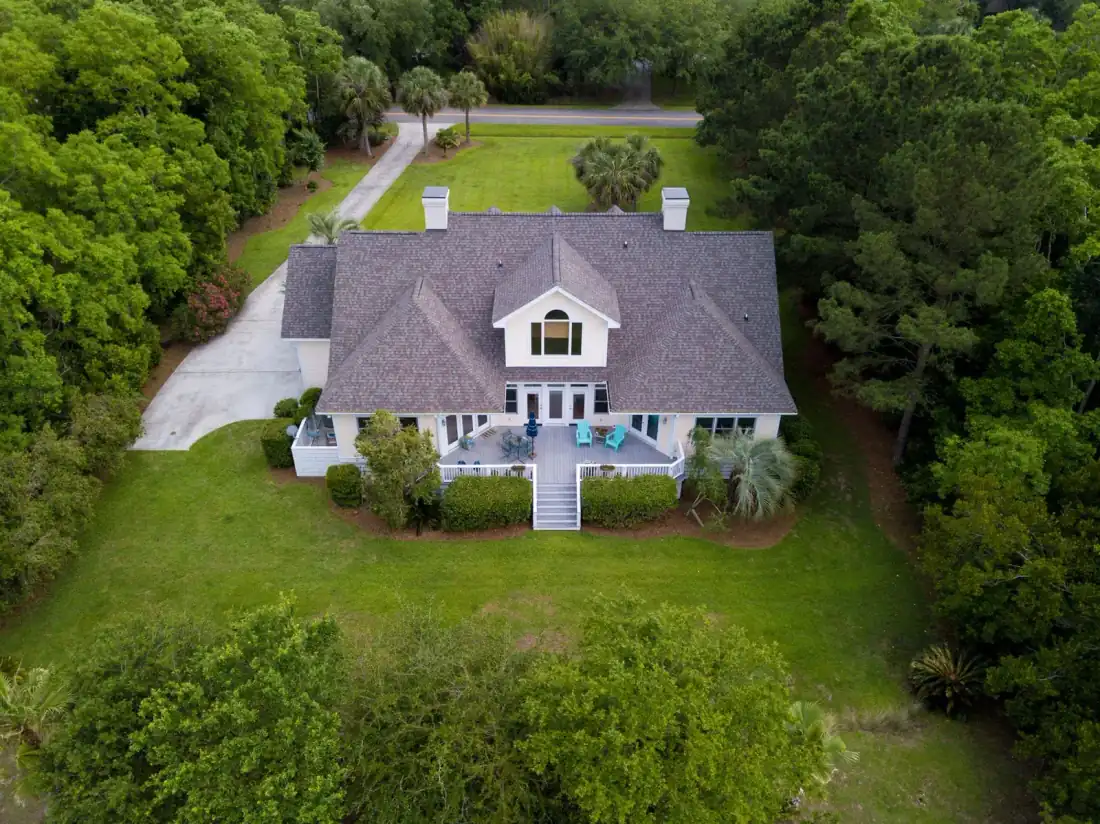
A custom home in Citrus County in 2027 lands between $195 and $265 per square foot for the vertical build on a mid-range specification, which is the band most families here actually hit. That number is close to the inland Florida average and it is not the interesting part of the budget. The interesting part is that two identical homes, same plan and same builder, can finish $80,000 apart in Citrus depending entirely on which lot they sit on. Nature Coast geography does that. This guide walks the three site conditions that drive the spread, prices each one, and gives you the questions to ask before a lot goes under contract.
The Short Answer for Citrus County in 2027
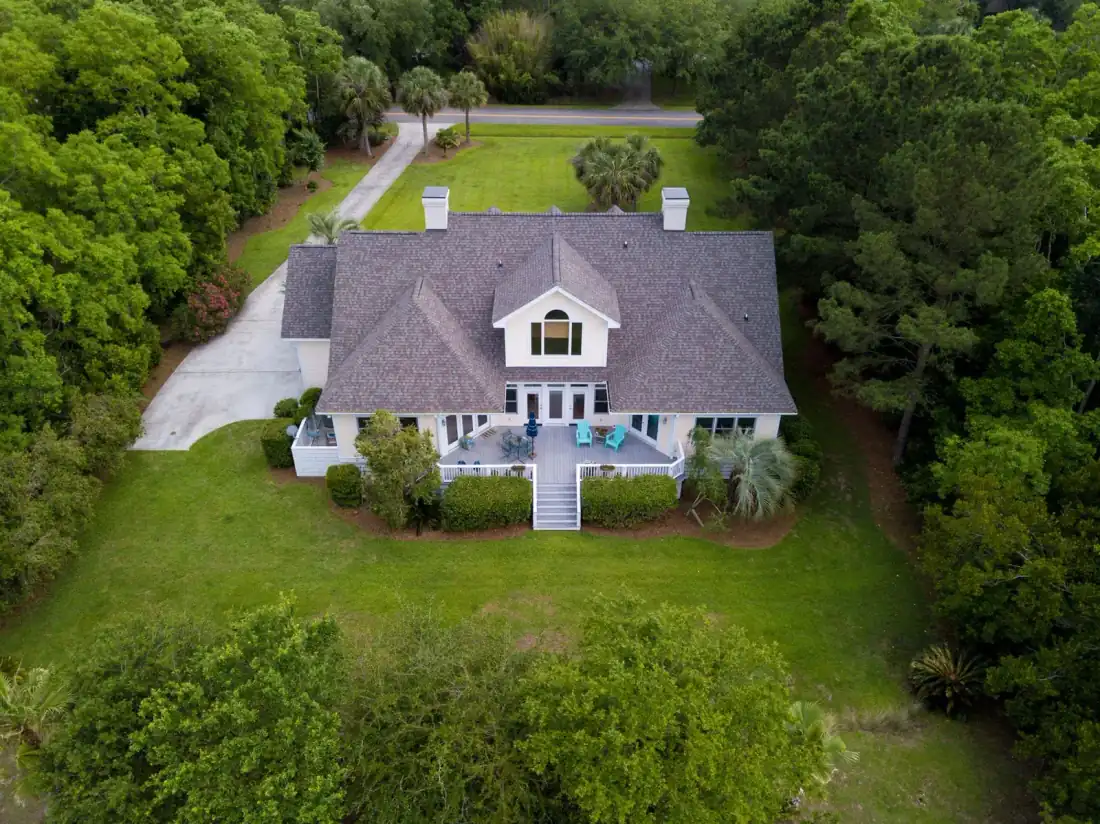
Vertical construction on a mid-range custom specification runs $195 to $265 per square foot in Citrus County for a 2027 start. Builder-grade production work sits below that at $150 to $195. High-end custom runs $265 to $400, and waterfront estate work goes past it. Those bands sit inside the statewide picture, where inland Florida builds average roughly $155 to $245 per square foot and coastal builds run $185 to $295.
On a 1,700 square foot living area, mid-range vertical construction is therefore somewhere around $331,000 to $450,000. Then the lot has its say, and in Citrus the lot can add anywhere from almost nothing to well over $100,000.
That spread is the whole point of this article. In Pasco or Hernando the biggest budget variable is usually which permitting jurisdiction you land in, which we broke down in the Pasco County cost guide. Citrus is different. Here the variables are physical: water elevation, limestone and nitrogen.
Three Site Conditions Decide the Budget Before the Floor Plan Does
Citrus County sits on the Nature Coast, which means low elevation, extensive tidal marsh, and a limestone aquifer close enough to the surface that it feeds first-magnitude springs. Every one of those features is why people move here, and every one of them has a construction cost attached.
- Flood elevation: how far above base flood elevation the county makes you build, and whether your zone allows fill or forces an open foundation.
- The springs septic rule: whether your parcel falls inside an adopted basin management action plan, which changes what septic system is legal.
- Karst geology: what the limestone under the lot is doing, and whether the geotechnical report comes back clean.
None of these appear on a listing sheet. All three are knowable before you close. The rest of this guide prices them.
Site Condition One: Flood Elevation, and Why AE and VE Are Two Different Budgets
Citrus County administers floodplain construction under Chapter 18 of the county code, and the operative number is the design flood elevation. The DFE is the elevation you actually have to build to, and in Citrus it is at least one foot above the base flood elevation, that extra foot being what the industry calls freeboard. It can be higher if better data is submitted with the permit.
What matters more than the freeboard is which zone you are in, because the zone decides the foundation type:
- Zones A and AE: high flood risk. Buildings must meet Florida Building Code sections R322.1 and R322.2. Elevation is typically achieved with fill and a stem wall, which is the cheaper path.
- Coastal A Zone and VE: highest risk, wave action expected. Buildings must meet R322.1, R322.2 and R322.3. That third section is the expensive one. It means an open foundation on piles or columns, breakaway walls below the DFE, and no reliance on fill for structural support.
- Zone X: outside the mapped floodplain. No elevation requirement, no flood insurance mandate from a federally backed lender, and the reason Lecanto and the inland ridge price differently from the coast.
The practical consequence is that a lot in Homosassa two miles from a lot in Crystal River can be in a completely different cost universe, and the difference is not visible from the road.
The 8 Percent: What Elevation Actually Costs on a Real Citrus Lot
Here is the math with real unit costs, on a 2,000 square foot footprint.
AE zone, stem wall path. Stem wall foundations run roughly $10 to $18 per square foot, with a common middle around $14. On 2,000 square feet that is about $28,000 for the foundation system itself. Add engineered fill, compaction testing, a boundary and elevation survey, and the elevation certificate, and the realistic all-in premium over an equivalent slab-on-grade build lands around $31,000 to $38,000. On a $420,000 vertical build that is 7 to 9 percent. So the 8 percent rule of thumb for a Citrus flood-zone lot is honest, as long as the lot is AE and the path is a stem wall.
Coastal A or VE zone, open foundation path. This is a different animal and the 8 percent number does not survive it. Driven piles on a house in the 2,000 to 4,000 square foot range run $50,000 to $100,000, and coastal piling foundations with full code compliance frequently land at or above $150,000. Industry estimates for building to current FEMA requirements in an AE or VE zone put the premium at $75,000 to $200,000 or more against an equivalent inland slab house. On the same $420,000 vertical build, that is 15 to 25 percent, not 8.
There is also a soil surcharge that shows up independently of zone. High groundwater and wet soils, which describe a great deal of coastal Citrus, add roughly $2 to $5 per square foot when extra base work, dewatering or stabilization is needed. On 2,000 square feet that is $4,000 to $10,000 that never appears in a per-square-foot quote.
The honest summary: budget 8 percent for an AE lot, and treat a Coastal A or VE lot as a different project entirely. Any builder who quotes you the same number for both has not looked at the flood map.
Site Condition Two: The Springs Rule That Adds Five Figures to Septic
This is the Citrus-specific item that catches the most buyers, because it is invisible and it is recent.
Under Florida Statute 403.067(7)(a)10., new onsite sewage treatment and disposal systems are prohibited inside an adopted basin management action plan area where connection to a publicly owned or investor-owned sewer system is available. And where septic is still allowed, the statute is specific about the technology: on lots of one acre or less inside a BMAP, installation of enhanced nutrient-reducing systems, or other systems achieving at least 65 percent nitrogen reduction, is required. HB 1379 tightened the same requirement effective July 1, 2023.
Citrus County is squarely in the middle of this. Kings Bay at Crystal River and the Homosassa springs group are Outstanding Florida Springs with adopted BMAPs, which is exactly the trigger condition. Whether your specific parcel is inside the mapped boundary is a parcel-level question, and it is one to answer before closing, not after.
The cost difference is not small:
- Conventional gravity septic: roughly $5,000 to $9,000 installed in Florida in 2026, with the full conventional range running to about $12,000 on difficult sites.
- Enhanced nutrient-reducing system in a BMAP springs zone: roughly $15,000 to $35,000 or more installed.
- The premium: about $8,000 to $20,000, plus an ongoing maintenance contract that a conventional system does not carry.
That recurring maintenance contract is the part people forget. An ENR system is mechanical. It has a service obligation for as long as you own the house, and it belongs in your carrying-cost math, not just your build budget.
Site Condition Three: Karst Geology and the Report You Should Not Skip
The same limestone that produces Three Sisters Springs and the Homosassa run produces the other thing Citrus is known for: solution features, voids and sinkhole activity. This is not a reason to avoid building in Citrus. It is a reason to spend a few thousand dollars finding out what is under your specific lot before you spend hundreds of thousands on top of it.
A geotechnical investigation with standard penetration test borings on a residential lot is a modest line item against the build, and it does three things. It tells the structural engineer what bearing capacity to design to. It reveals whether the site needs grouting, over-excavation or a deepened footing, all of which are far cheaper to plan than to discover at inspection. And it produces a document that matters to your insurer and to the next buyer.
Skipping it is the single most expensive false economy available in this county. A foundation designed for the wrong bearing condition does not fail during construction. It fails after you are living in it, and by then the warranty conversation is a legal conversation.
Citrus Impact Fees: The $13,109 Line and the 65 Percent Jump Behind It
Impact fees are the line most often missing from a verbal quote, and in Citrus they moved sharply and recently.
The Board of County Commissioners raised impact fees by roughly 65 percent, taking the single-family residential total from $7,949 to $13,109, with the new schedule taking effect around November 2025. The county collects across eight program areas: transportation, schools, parks and recreation, libraries, fire rescue, emergency medical services, law enforcement and public buildings. Transportation and schools accounted for the largest increases.
The driver was growth. Citrus County population is up more than 10 percent since 2021, and the fee schedule had not kept pace with what that growth costs the county to serve.
For your budget the takeaway is simple: $13,109 is a hard number, it is due at permit, and if a builder quoted you a Citrus build using the old $7,949 figure, your budget is $5,160 short before anyone pours anything. Ask when the quote was built and against which schedule.
Full Line-Item Budget: A Homosassa AE Lot, 1,700 Square Feet
Take a real configuration: a 1,701 square foot living area plan on an AE-zone lot in Homosassa, inside the BMAP, on septic and well, mid-range specification, 2027 start. Here is the stack.
- Vertical construction: 1,701 sq ft at $215 per square foot, roughly $365,700.
- Elevation premium, AE stem wall: $31,000 to $38,000 including fill, compaction and the elevation certificate.
- Wet-soil site surcharge: $4,000 to $10,000 if dewatering or stabilization is required.
- Enhanced nutrient-reducing septic: $15,000 to $35,000, against $5,000 to $9,000 for conventional.
- Private well and pump: budget separately; depth in Citrus varies with the limestone.
- Impact fees: $13,109.
- Geotechnical investigation, survey, elevation certificate: a low four-figure block that protects everything above it.
The lot-driven items alone total roughly $63,000 to $96,000 on top of the vertical build, before land. That is why two identical Citrus homes finish so far apart, and it is why the per-square-foot number you were quoted is the least informative figure in the conversation.
Move the same plan to a Zone X lot in Lecanto on county sewer and most of that stack disappears. The vertical cost barely moves.
Crystal River, Homosassa and Lecanto Are Three Different Budgets
- Crystal River: the highest concentration of AE and Coastal A exposure in the county, plus the Kings Bay BMAP. Waterfront and near-water lots need the flood zone confirmed before anything else. This is where the VE math applies and where the 8 percent assumption most often breaks.
- Homosassa: similar coastal profile with a heavier mix of AE stem-wall lots than open-foundation lots, and heavy BMAP overlap. This is the classic 8 percent scenario, plus the septic premium.
- Lecanto and the inland ridge: higher elevation, much more Zone X, more sewer availability. The cheapest place to build in the county on a per-square-foot-delivered basis, and the reason inland Citrus lots trade at a premium to their acreage.
None of this is a recommendation to avoid the coast. It is a recommendation to price the coast correctly. A Crystal River lot with the flood premium priced in honestly is a good buy. The same lot with the premium discovered at permit is a stalled project.
What to Ask Before the Lot Goes Under Contract
Six questions, in order. Each one has a document behind it, and each one is answerable during a due diligence period.
- What flood zone is the parcel in, per the current FIRM? Not the neighborhood, the parcel. Get the panel number.
- What is the base flood elevation, and what does that make the DFE? Remember the minimum one foot of freeboard.
- Is any part of the buildable area in Coastal A or VE? If yes, price an open foundation, not a stem wall.
- Is the parcel inside an adopted BMAP, and is sewer available at the road? This decides conventional septic, ENR septic or sewer connection.
- What does a geotechnical report say about the limestone? If the seller has one, read it. If not, make the offer contingent on one.
- Which impact fee schedule is my quote built against? The answer should be the current $13,109, not the pre-2025 figure.
A builder who works Citrus regularly answers all six without hesitating. A builder who does not will answer them after the contract is signed, which is where change orders come from. The same principle applies to schedule, and the realistic timeline for a Florida build start to finish is laid out in how long it takes to build a house in Florida.
Getting a Real Number for Your Citrus Lot
Protech Construction Services is a licensed general contractor, CBC1268979, working out of 9035 Jayson Dr, Brooksville FL 34613, and we build across Citrus County alongside Hernando and Pasco. We have priced enough Nature Coast lots to know that the flood map and the BMAP boundary decide more of the budget than the finish selections do.
If you already own a lot, send us the parcel number and we will tell you which of the three site conditions apply before we talk about plans at all. If you are still shopping, we would rather look at two or three candidate lots with you than price a plan against a lot that turns out to need piles. Our custom home building work starts with the site, and if a stock plan fits your lot we will say so, or adapt one through custom floor plans. The Sequoia at 1,701 square feet of living area and the Linleigh at 1,499 both sit in the footprint range that works well on an elevated Citrus foundation, where every extra square foot of slab is also an extra square foot of stem wall.
Call (352) 710-5455 or use the contact page and we will put a real number against your actual parcel, with the elevation, septic and impact fee lines shown separately so you can see what is a build cost and what is a lot cost.
FAQ
Frequently Asked Questions
How much does it cost to build a house in Citrus County FL in 2027?
+
What are Citrus County impact fees for a new single-family home?
+
How much does a flood zone add to a build in Crystal River or Homosassa?
+
Do I need a special septic system to build in Citrus County?
+
How high do I have to elevate a house in a Citrus County flood zone?
+
Is a geotechnical report necessary for a Citrus County lot?
+
Is it cheaper to build inland in Citrus County than on the coast?
+
Keep Reading
More articles from the Protech Construction blog
Raising a House in Florida: Cost and Flood Mitigation
A house lift is three projects billed as one, and most quotes cover only the first. Here is where the money goes, what Elevate Florida has actually funded, the ICC coverage already inside your flood policy, and how to compare elevating against tearing down and rebuilding.
Read ArticleElevated and Piling Home Cost in Florida: 2026 Guide
The flood zone tells you how high the floor has to be. It does not tell you what that height costs, and the numbers floating around the internet are off by a factor of three. Stem wall runs about $5 per square foot over slab on grade. A complete piling foundation runs $50,000 to $90,000, which on a 2,400 square foot home is closer to $31 per square foot than the $100 to $150 figure commonly quoted. Here is the honest breakdown, foundation by foundation.
Read ArticleBuilding a House in a Florida Flood Zone: 2026 Guide
A flood zone does not decide whether a Nature Coast lot is buildable. It decides one number, the required elevation, and everything else follows from it. Here is the sequence a permit reviewer walks, from reading the FIRM panel to the insurance math that makes a foot of voluntary freeboard worth roughly $12,000 over a 30-year mortgage.
Read ArticleReady to Build?
Get your free evaluation today.
No-pressure consultation. We serve Hernando, Pasco, and Citrus counties. Call us now or request a visit online.