Blog
New Construction Closing Costs in Florida: The 9 Fees Buyers Forget Beyond the Build Price
Call (352) 710-5455Why Closing Costs on a New Build Surprise Florida Buyers
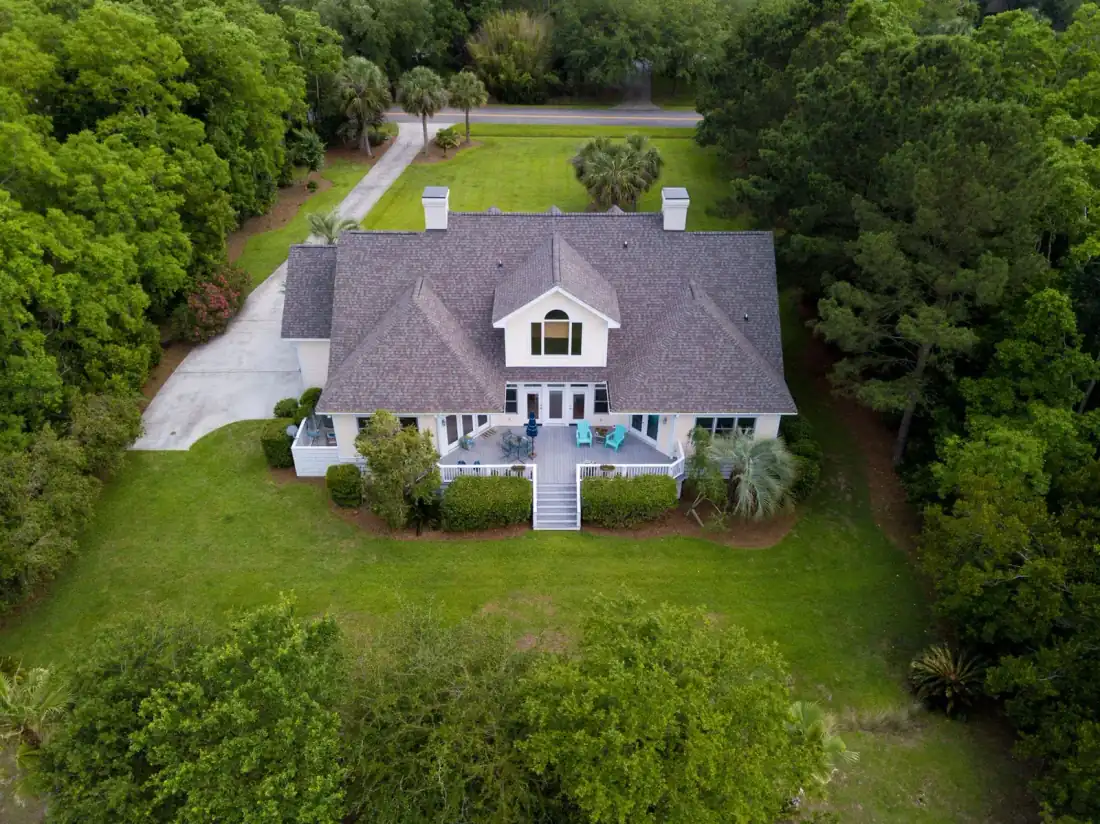
Most buyers spend months on the build price. They compare floor plans, argue over countertops and negotiate the lot. Then the Closing Disclosure arrives and there is a second number on it, often in the tens of thousands, that nobody talked about at the design table. On a new home in Florida that number is made of state taxes, title insurance, lender charges, prepaid escrow and a few fees that only exist because the house is new.
This guide walks through the nine charges that most often catch new-construction buyers off guard, explains which ones are fixed by Florida law and which ones you can negotiate, and runs the numbers on a typical Hernando County build. Where a figure comes from a statute or a state agency, we say so. Where it depends on your lender, your county or your contract, we say that too, because a guide that pretends every fee is fixed is not much help when you are reading your own disclosure.
First, Know Which Kind of New Construction Closing You Have
The phrase "new construction closing costs" covers three different situations, and the fees change with each one:
- Buying a finished or spec home from a builder: one closing, with a deed transferring house and lot together. This looks like a resale closing, plus a few builder-specific line items.
- Building on land you already own with a construction-to-permanent loan: the loan closes before the build starts, and there is no deed for the house because you already own the dirt. Our guide to the construction-to-permanent loan in Florida explains how that single closing works.
- Two-time close: a short-term construction loan closes first and a separate permanent mortgage closes when the house is done, which means paying many of the same fees twice.
If you are still deciding between these paths, our custom home building team can walk you through how each one changes your cash at closing before you sign a contract. The rest of this article flags which fees apply to which path.
Fee 1: Documentary Stamp Tax on the Deed
Florida charges documentary stamp tax when a deed is recorded. According to the Florida Department of Revenue, the rate is 70 cents per $100 of consideration in every county except Miami-Dade, which uses 60 cents per $100 plus a surtax that does not apply to a single-family home. On a $450,000 house and lot, that is $3,150.
Who pays is a matter of contract and local custom, not law. In much of Florida the seller traditionally pays the deed stamps on a resale, but builder contracts are written by the builder and frequently shift closing costs to the buyer. Read the closing-cost paragraph of a builder contract as carefully as the price paragraph.
If you build on land you already own, there is no deed for the house at the end, so this tax only hit you once, when you bought the lot. That is one of the quieter savings of building on your own parcel, and it is part of why we recommend reading our guide to buying land to build a house in Brooksville before you shop for a finished home.
Fee 2: Doc Stamps and Intangible Tax on the Mortgage
The loan carries two separate state taxes, and together they are usually the biggest government charge on a financed new build:
- Documentary stamp tax on the mortgage: 35 cents per $100 of the amount secured, per the Department of Revenue. Mortgages have no cap.
- Nonrecurring intangible tax: a one-time tax of 2 mills, or $2 per $1,000, on obligations secured by a mortgage on Florida real property, under Florida Statute 199.133.
On a $360,000 loan that is $1,260 in mortgage stamps plus $720 in intangible tax, or $1,980 combined. On a two-time close you can pay both taxes on the construction loan and again on the permanent mortgage, which is a real reason buyers prefer a one-time close. Veterans should compare the numbers in our guide to the VA and FHA one-time close construction loan before choosing a lender.
Fee 3: Title Insurance, Which Florida Prices by Rule
Florida is a promulgated-rate state for title insurance. The Department of Financial Services explains that premiums are set by Rule 69O-186.003 of the Florida Administrative Code, so every insurer charges the same premium for the same policy amount. The owner's original rate is $5.75 per $1,000 for the first $100,000 and $5.00 per $1,000 from $100,000 up to $1 million, with a $100 minimum.
On a $450,000 owner's policy, the math is $575 for the first $100,000 plus $1,750 for the next $350,000, for a premium of $2,325. A lender's policy issued at the same time is a $25 simultaneous-issue charge when it does not exceed the owner's coverage, although lenders also require endorsements that add to the bill.
What is not promulgated is everything around the premium: settlement or closing fees, title search, lien search, courier and document prep. Those vary by title agent, and on a new build you can usually choose the agent if you are the one paying the premium, subject to lender approval. Shopping those service fees is one of the few places on the disclosure where a phone call saves money.
One more point on a new build: make sure the title work covers construction liens. Florida's construction lien law lets unpaid subcontractors and suppliers lien the property, and a clean final payment process with releases from everyone who worked on the house protects you more than any policy endorsement. This is a big part of what construction management on our projects is for.
Fee 4: Recording Fees
The county clerk charges to record your deed, mortgage and any related documents. Florida clerks publish the same base schedule: $10 for the first page and $8.50 for each additional page, under Florida Statute 28.24, as listed by county clerks including Pasco. A 3-page deed costs about $27 to record. A 15-page mortgage costs about $129. These are small numbers, but on a construction loan with riders, notices of commencement and lien releases, they add up to a few hundred dollars instead of the few dozen buyers expect.
Fee 5: Lender Charges and the Second Appraisal Visit
Lender fees are set by the lender, not the state, and they belong on your Loan Estimate within three business days of applying. The ones that surprise new-construction buyers are specific to building:
- Appraisal subject to completion: the appraiser values the home from plans and specs before it exists, then comes back for a completion inspection when the house is done. That second visit is often a separate charge.
- Draw inspection fees: on construction loans, the lender inspects progress before each draw is released, and some lenders bill for each visit.
- Rate lock extensions: builds run longer than the standard lock window. If weather, inspections or material delays push past your lock, extending it costs money. Our guide to how long it takes to build a house in Florida helps you pick a realistic lock.
- Interest during construction: on a construction loan you pay interest only on what has been drawn, but it starts with the first draw, months before you move in.
Under the federal TRID rule, the lender must deliver your Closing Disclosure at least three business days before closing. Compare it line by line with the Loan Estimate. Some charges are allowed to change, and some are not.
Fee 6: Prepaid Escrow for Insurance in a Hurricane State
Escrow is not a fee, but it is cash you bring to closing, and in Florida it is often the largest single item after the down payment. Lenders collect the first year of homeowners insurance, and if the home is in a flood zone, the first year of flood insurance, and then set up an escrow account with a cushion. Federal Regulation X limits that cushion to one-sixth of the estimated annual payments, which is two months.
Windstorm coverage is the expensive part of a Florida policy, which is why the features of a new house matter at closing. A home built to the current Florida Building Code starts with a strong windstorm discount, and a wind mitigation inspection on the finished house documents it. Have that inspection done before you bind the policy, not after the first renewal, so the premium in your escrow is the right one from day one.
If your lot sits in a flood zone, add an elevation certificate and a flood policy to the list. Our guide to building in a flood zone in Florida covers how elevation changes both.
Fee 7: The Property Tax Jump After Your First January 1
This is the fee that does not appear at closing, and it is the one that causes the most phone calls a year later. Florida assesses real property as of January 1 each year. Under Florida Statute 192.042, improvements that are not substantially completed on January 1 get no value that year. "Substantially completed" means the house, or some self-sufficient unit in it, can be used for its purpose.
Here is how that plays out. You close in, say, April. Your first tax bill, and the escrow your lender set up at closing, may be based on the land alone, because the house was not finished on January 1. The next January the house is assessed at full value, the bill rises sharply, and the lender sends an escrow shortage notice with a higher monthly payment. Nothing went wrong. The escrow was simply sized for a vacant lot.
Two things soften the jump:
- File for homestead by March 1: if you own the home and make it your permanent residence as of January 1, you can apply for the homestead exemption. The deadline is March 1, and missing it waives the exemption for that year. The Department of Revenue set the inflation-adjusted second exemption at $26,411 for 2026, on top of the base $25,000.
- Watch the 2026 amendment: Florida voters approved Amendment 3 on November 3, 2026, which raises the non-school homestead exemption to $150,000 for 2027 and $250,000 for 2028, according to news reports of the results. Reports also say people who were not Florida residents on December 31, 2026 start with the current exemption and reach the larger one later. The Legislature still has to pass implementing rules, so confirm your numbers with the Hernando County Property Appraiser before you budget around them.
Ask your lender to size the escrow on the estimated completed value, not the land-only bill. A slightly higher payment now beats a shortage letter later.
Fee 8: Final Survey, Elevation Certificate and Certificate of Occupancy Items
Lenders and title companies want a final survey that shows the finished house where the plans said it would be, inside the setbacks and clear of easements. On a new build that is a new survey, not an old one from the lot purchase. In a special flood hazard area, an elevation certificate prepared after construction is needed for the flood policy. Some of these costs sit in the builder's price and some land on the buyer, so ask early.
Impact fees and utility connection fees are usually paid at permit rather than at closing, but they are still part of the cost of a new house. Hernando County's schedule effective December 2, 2024 totaled $8,663 per single-family detached home across education, library, fire and EMS and jail components, and the county has been reviewing fees in 2026. Ask whether these are included in your build price or billed separately, and check the county's current schedule for your permit date. Our cost to build a custom home in Hernando County guide shows where they fit in the full budget.
Fee 9: HOA and Community Charges
In a new subdivision, the HOA often charges a one-time capital contribution or transfer fee at closing, collects the first assessment period in advance, and in a community still controlled by the developer, may have budgets that change once homeowners take over. None of this is set by the state as a flat amount. Ask for the HOA documents, the current budget and the closing-related fees in writing before you sign. If you are building on your own lot outside an HOA, this line disappears.
A Worked Example: $450,000 Home, $360,000 Loan
Here is how the state-fixed pieces add up on a $450,000 finished home in Hernando County with an 80% loan. These are the parts set by statute or rule. Lender fees, title service fees, insurance and taxes depend on your file and are left out on purpose.
- Deed doc stamps: $450,000 x $0.70 / $100 = $3,150 (often a seller or builder cost, check the contract)
- Mortgage doc stamps: $360,000 x $0.35 / $100 = $1,260
- Intangible tax: $360,000 x 0.002 = $720
- Owner's title premium: $575 + $1,750 = $2,325
- Lender's title policy, simultaneous issue: $25, plus endorsements
- Recording: roughly $27 for a 3-page deed and $129 for a 15-page mortgage
That is about $7,600 in state-set charges before a single lender fee, insurance payment or escrow deposit. If you build on land you already own with a one-time close, the deed stamps and owner's title premium on the house drop out, and the total falls to roughly $2,100 plus title on the loan. The difference is real money, and it is why the path you choose matters as much as the floor plan.
How to Keep New Construction Closing Costs Under Control
- Decide the loan path before the plan: a one-time close avoids paying mortgage taxes twice. Compare a build vs buy decision in Florida with closing costs included, not just price per square foot.
- Read the builder contract's closing-cost clause: deed stamps, owner's title and survey are negotiable items, not laws of nature.
- Shop the title agent's service fees: the premium is fixed, the services are not.
- Lock for a realistic timeline: extensions cost more than a longer initial lock.
- Get the wind mitigation report before binding insurance: it sets the escrow you prepay.
- Size escrow on the finished value and file homestead by March 1: this is what prevents the year-two shortage.
Building in Hernando, Pasco or Citrus? Start With the Full Number
We build custom homes across Brooksville, Spring Hill and the rest of Hernando County, as well as Pasco and Citrus. Every estimate we give separates the build price from permit fees, site work and the costs that land at closing, so you see one honest number instead of two surprises. Browse our home floor plans to see what a finished home looks like, then call (352) 710-5455 to talk through your budget. Protech Construction is a licensed Florida certified building contractor, CBC1268979.
FAQ
Frequently Asked Questions
How much are closing costs on new construction in Florida?
+
Who pays documentary stamp tax on a new construction home in Florida?
+
Why did my property taxes go up a year after closing on a new home?
+
Can I negotiate title insurance in Florida?
+
Are closing costs lower if I build on land I already own?
+
Keep Reading
More articles from the Protech Construction blog
Wind Mitigation Inspections in Florida: Which Build Features Cut Your Home Insurance the Most
How the Florida wind mitigation inspection works, the features on the OIR-B1-1802 form, the April 2026 revision, who can sign it, what it costs, how long it lasts and which new-build choices earn the biggest windstorm credits.
Read Article
2027 New-Home Trends in Florida: 8 Design and Build Choices Buyers Ask For (and 3 That Fade)
Eight design and build choices Florida buyers are asking for going into 2027, from flex rooms and concrete block to the 9th Edition Florida Building Code and energy efficiency after the federal credits ended, plus three choices that are fading.
Read ArticleBuilding a Duplex in Florida: Construction Cost, Zoning and Rental Math for Hernando and Pasco Lots
How much it costs to build a duplex in Hernando, Pasco and Citrus counties in 2026: cost per square foot, the 1-hour fire separation wall, per-unit impact fees and utilities, zoning, a sample budget, homestead rules for owner-occupied duplexes and a simple rental check.
Read ArticleReady to Build?
Get your free evaluation today.
No-pressure consultation. We serve Hernando, Pasco, and Citrus counties. Call us now or request a visit online.