Blog
Building a Duplex in Florida: Construction Cost, Zoning and Rental Math for Hernando and Pasco Lots
Call (352) 710-5455Why Duplexes Are Back on the Table in Hernando and Pasco
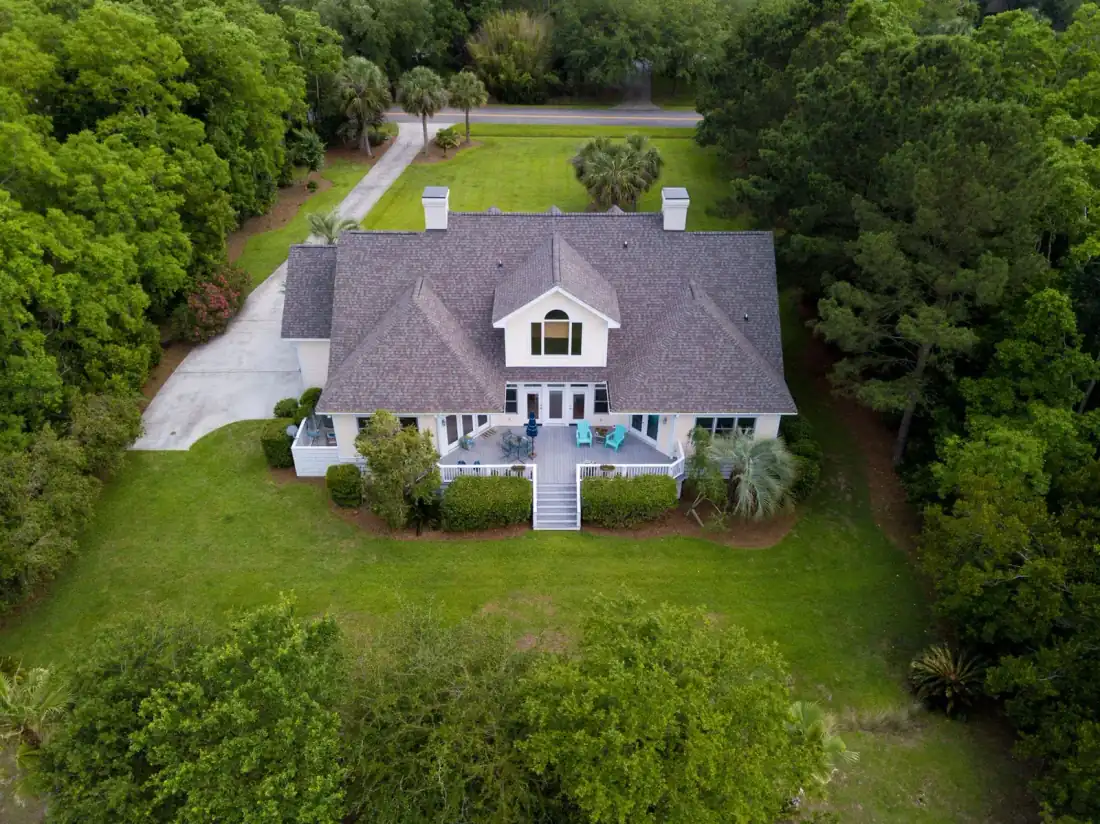
A few years ago, almost every owner who called us about a lot in Brooksville or Hudson wanted a single-family home. Today a growing share ask a different question: what if we built two units instead of one? Some want to live in one side and rent the other. Some want a home for aging parents next door with a real wall between them. Some are investors who did the math on rents and want a second income stream from the same piece of land.
A duplex can make that math work, but only if you price it correctly from the start. The build cost per square foot is only part of the story. Zoning decides whether you can build two units at all, the building code adds a fire-rated wall that a single home does not need, impact fees and utility connections are charged per unit, and property taxes treat the half you live in differently from the half you rent. This guide walks through each of those numbers for Hernando, Pasco and Citrus county lots, then puts them together in a sample budget and a simple rental check.
What Counts as a Duplex Under Florida Code and Zoning
A duplex is a two-family dwelling: one building with two complete dwelling units, each with its own kitchen, bathroom, living space and entrance. That is different from a single-family home with an in-law suite, and different from a detached accessory dwelling unit behind a main house. The line matters because it changes the zoning district you need, the code requirements and the impact fees. We explain where that line sits for in-law layouts in our guide to in-law suites versus detached ADUs.
Under the Florida Building Code, one- and two-family dwellings are covered by the Residential volume, the same code that governs a single-family house. That keeps a duplex simpler than a triplex or fourplex, which move into the commercial building code with different requirements. For an owner, this means a duplex is built with the same basic systems, framing or block methods and inspection sequence as a custom home, plus a handful of two-unit requirements covered below.
Zoning is a separate question. Each county and city decides which districts allow two-family dwellings. In unincorporated Hernando County, the R-2 district is described in the county code as a medium density district for single-family and two-family dwellings, while many of the large-lot residential and agricultural districts are aimed at single-family homes. Pasco County, Citrus County and the cities inside them, such as Brooksville, Dade City and New Port Richey, each have their own tables. The only safe answer for a specific parcel comes from the county or city planning department, and we always confirm it before drawing a plan.
The Fire Separation Wall: The Code Item That Changes the Plan
The biggest code difference between a duplex and a single home is the separation between units. The residential code requires the two dwelling units to be separated by wall or floor assemblies with at least a 1-hour fire-resistance rating, tested to the ASTM E119 or UL 263 standards. When the building has an automatic sprinkler system throughout, the code allows the rating to drop to 1/2 hour. The 9th Edition of the Florida Building Code, scheduled to take effect at the end of 2026, adjusts the sprinkler exception, so your designer should draw to whichever edition is in force when you apply for the permit.
In practice, the separation is usually a rated wall assembly between side-by-side units, running from the foundation to the underside of the roof deck, or a rated floor and ceiling assembly between stacked units. Penetrations for plumbing, wiring and ducts have to be protected so they do not create a path for fire. That is real money and real design time, and it is also the reason a duplex is quieter between units than most owners expect, because a rated assembly with insulation and extra drywall layers blocks a lot of sound.
- Side-by-side: one long rated wall, two foundations sharing a footprint, two roofs that read as one. Easier to sell later, simpler fire separation, more foundation and roof area.
- Stacked (up and down): a rated floor and ceiling assembly, less foundation and roof per square foot, but stairs, sound transfer through the floor and a second-story structure to engineer.
- Mirror plan: both units on the same layout flipped, which repeats framing, cabinets and fixtures and keeps cost per square foot down.
Duplex Construction Cost Per Square Foot in 2026
National cost guides put duplex construction roughly between $110 and $180 per square foot for a single-story layout and roughly $130 to $220 for side-by-side, before land. Those are broad national averages. In our market we price a duplex the same way we price any home: by finish level, then adjusted for the second set of systems.
For a single-family custom home in Hernando County in 2026, builder grade runs about $150 to $200 per square foot, mid-range custom about $200 to $275, and high-end custom $250 to $400, as we break down in our Hernando County custom home cost guide. Most rental duplexes are built at the lower end of that range, with durable, easy-to-replace finishes, while owner-occupied duplexes often get a nicer finish on the owner side.
The second unit pushes cost per square foot up for the same reason an ADU costs more per foot than a main house: it adds a full second kitchen, a second set of bathrooms, a second water heater, a second electrical panel and meter, and a second HVAC system, all packed into the same building. The rated separation wall adds to that. Mirror plans and shared walls bring part of it back down, because two identical units repeat the same framing and trim work.
- Builder grade duplex: roughly the low end of the $150 to $200 band, plus the second-unit premium. Typical for pure rental.
- Mid-range duplex: roughly $200 to $275 per square foot. Typical when the owner lives in one side.
- Upgraded owner side: a common hybrid, with the owner unit finished at mid-range and the rental unit at builder grade.
The Per-Unit Costs Owners Forget
A duplex budget goes wrong when the owner multiplies square footage by a rate and stops. Several line items are charged per dwelling unit, not per building, and they add up quickly.
- Impact fees: counties and cities charge impact fees for each new dwelling unit to fund schools, roads, parks and fire service. On a new single-family home in Hernando County, the combined schedule we used in our 2026 cost guide comes to roughly $12,785. In unincorporated Pasco, the mobility and school fees alone on a single-family home exceed $24,000. Many schedules set a separate rate for duplex or multi-family units, so ask the county for the duplex line, not the single-family line.
- Water and sewer: two units usually mean two water meters and two sewer connections on public utilities, each with its own connection charge. On a rural lot, a septic system has to be sized for the combined bedrooms of both units, and the well has to keep up with two households. Our guide to well and septic costs in Florida covers the rural side.
- Electric service: two meters and two panels, and sometimes a larger service drop from the utility.
- Permits and plan review: permit fees are set on project valuation, and a duplex is valued as a larger project than a single home of the same footprint.
- Design and engineering: two-unit plans need the separation assemblies detailed and, for stacked layouts, the floor and stair structure engineered.
Sample Budget: A Side-by-Side Duplex in Hernando County
Here is an illustrative budget for a single-story, side-by-side duplex with two mirror units of about 1,000 square feet each, two bedrooms and two baths per side, built at a mid-range rate on a lot with public water and sewer. It is an example to show how the pieces add up, not a quote. Your plan, lot and finish choices will move every line.
- Vertical construction: 2,000 square feet at $200 per square foot comes to about $400,000. At $175 per square foot, about $350,000.
- Plans and engineering: about $10,000 to $18,000 for a mirror plan with rated separation details.
- Survey and soil test: about $1,500 to $3,000.
- Permit fees: about $4,000 to $8,000, depending on valuation and jurisdiction.
- Impact fees: charged for two dwelling units. Using the single-family figure as a ceiling, up to about $25,000, often less where the county has a lower duplex rate.
- Utility connections: two water and sewer connections and two electric meters, commonly several thousand dollars per unit.
- Site work and driveway: about $15,000 to $35,000 for clearing, grading, a wider driveway and parking for two households.
- Contingency: 10 percent of the build, about $35,000 to $40,000.
Added up, this example lands roughly between $430,000 and $530,000 before land. That works out to about $215 to $265 per square foot all in, which is why a duplex rarely saves money compared with one single-family home of the same size. Where it wins is in what the building produces: two homes on one lot, one of which can pay part of the mortgage.
The Rental Math: A Simple Way to Test the Deal
Before you commit to a duplex, run a simple check with your own numbers. Start with a realistic monthly rent for one unit, based on comparable two-bedroom rentals near your lot, not on the best listing you can find. Multiply by 12 for gross annual rent. Then subtract a vacancy allowance, insurance, property taxes on the rental side, maintenance and, if you will not manage it yourself, a property manager fee.
As a worked example only, suppose one side would rent for $1,600 a month. That is $19,200 a year gross. Take off 5 percent for vacancy, about $960, and set aside a combined $5,000 to $6,000 a year for insurance, taxes on the rental half and maintenance. Net operating income lands somewhere around $12,000 to $13,000 a year on the rental side. If the second unit added $200,000 to $250,000 to the total project cost compared with building one home, that net income is roughly a 5 to 6 percent yield on the extra money before financing. Those numbers are placeholders. Swap in real rent comps, a real insurance quote and the property appraiser's tax estimate before deciding.
Owner-occupied duplexes also change the tax side. In Florida, the homestead exemption and the Save Our Homes cap of 3 percent on assessed value increases apply only to the part of the property that is your permanent residence. County property appraisers apportion the exemption, so the unit you rent is assessed as non-homestead property, which falls under the separate 10 percent cap on assessment increases. Ask the Hernando, Pasco or Citrus property appraiser how they split a duplex before you finalize the numbers.
Lot Selection: What Makes a Good Duplex Lot
The right lot saves more money than any finish choice. A good duplex lot has the correct zoning already in place, enough width for two driveways or a shared drive with parking for both units, and either public water and sewer at the street or soil and space that can handle a larger septic system. A rezoning request adds months and public hearings, with no guarantee of approval, so start with lots that already allow two-family dwellings.
In Hernando County, that usually means looking at established areas near Brooksville and Spring Hill where two-family zoning and utilities already exist, rather than large rural parcels zoned for single-family or agricultural use. In Pasco, the older grid neighborhoods in New Port Richey and Hudson have a mix of zoning districts worth checking parcel by parcel, and Dade City has its own city code. Our guide to buying land to build in Brooksville walks through the due diligence checks that apply to any lot.
Insurance, Wind Code and Long-Term Costs
A duplex is built to the same wind design requirements as any home at its address. Impact-rated windows or shutters, roof-to-wall connections and a well-detailed roof matter just as much here, and they affect insurance on both units. Landlord policies cost more than owner-occupant homeowners policies, and lenders will want both in place. Get insurance quotes on the plan before you break ground, not after.
Long-term costs are higher than a single home because there are two of everything: two water heaters, two HVAC systems, two sets of appliances. Choosing durable, common equipment on both sides keeps replacement simple. Shared roofs and exterior walls, on the other hand, mean only one roof to maintain over the life of the building.
How Long a Duplex Takes to Build
Once permits are issued, a single-story side-by-side duplex follows a schedule close to a single-family home of the same total size, with extra time for the separation wall inspections and the second set of rough-in and final inspections. Planning, zoning confirmation, design and permitting often take as long as the build itself. Our guide to how long it takes to build a house in Florida covers the phases and where delays usually come from.
Should You Build a Duplex or a Home With an ADU?
If your lot allows both, compare a duplex with a single-family home plus a detached accessory dwelling unit. An ADU keeps the main house as a standard single-family property, which can be easier to sell, and the backyard unit can be smaller and cheaper. A duplex usually gives two units of equal size and value, a shared structure that is efficient to build, and a stronger rental story. Our ADU construction service and our custom home building service cover both paths, and we price them side by side for owners who are deciding.
Plan Your Duplex With a Local Builder
A duplex is one of the best uses of a well-located lot in our area, and one of the easiest projects to underprice. We start every duplex conversation with the parcel: zoning, utilities, impact fees and the property appraiser's treatment of each unit. Then we draw a plan that fits the lot and price it with every per-unit cost included. Our custom floor plan service handles mirror and owner-plus-rental layouts, and our construction management service keeps the two-unit budget and draws organized.
We build across Hernando, Pasco and Citrus counties, including new construction in Brooksville, homes in Spring Hill and New Port Richey. Protech Construction Services LLC is a Florida Certified Building Contractor, license CBC1268979, at 9035 Jayson Dr, Brooksville FL 34613. Call (352) 710-5455 to talk through your lot and get a real duplex budget before you buy or design.
FAQ
Frequently Asked Questions
How much does it cost to build a duplex in Florida in 2026?
+
Is it cheaper to build a duplex than a single-family home?
+
Can I build a duplex on my lot in Hernando County?
+
What fire separation does a duplex need in Florida?
+
Do I get a homestead exemption on a duplex I live in?
+
Are impact fees charged twice on a duplex?
+
Keep Reading
More articles from the Protech Construction blog
How Much to Pay a Contractor Upfront in Florida: Deposit Limits, Draw Schedules and Red Flags
How much to pay a contractor upfront in Florida: the 10 percent trigger in section 489.126, permit and start deadlines, criminal penalties, reasonable deposits by project type, draw schedules tied to inspected work, lien law paperwork, red flags, the Homeowners' Construction Recovery Fund and what to do if a contractor takes a deposit and disappears.
Read Article
Construction Change Orders in Florida: How $500 Tweaks Snowball to $40k (and How to Cap Them)
How construction change orders work in Florida: what a complete change order includes, the lien, recovery fund and contractor moneys statutes behind residential contracts, the three kinds of change orders, how small tweaks snowball, construction loan impacts, how to cap changes and red flags to watch.
Read Article
New Home Builder Warranty in Florida: What the 1-2-10 Warranty Actually Covers (and What It Doesn't)
What a new construction warranty covers in Florida: the one-year statutory warranty in effect since July 2025, the 1-year workmanship, 2-year systems and 10-year structural structure, manufacturer warranties, exclusions, Chapter 558 notice, the 7-year statute of repose and how to file a claim.
Read ArticleReady to Build?
Get your free evaluation today.
No-pressure consultation. We serve Hernando, Pasco, and Citrus counties. Call us now or request a visit online.