Blog
Build vs Buy a House in Florida: When a $600k Custom Build Beats a $450k Existing Home on 10-Year Value
Call (352) 710-5455Buying an existing home in Florida almost always costs less on day one, but a 20 to 30-year-old home carries roof, AC, window and insurance bills that a new home does not. Over 10 years, a custom build that costs $150,000 more up front can close most of that gap and leave you with a newer, more valuable home. Here is how to run the numbers for your family.
The Real Question Behind Build vs Buy in Florida
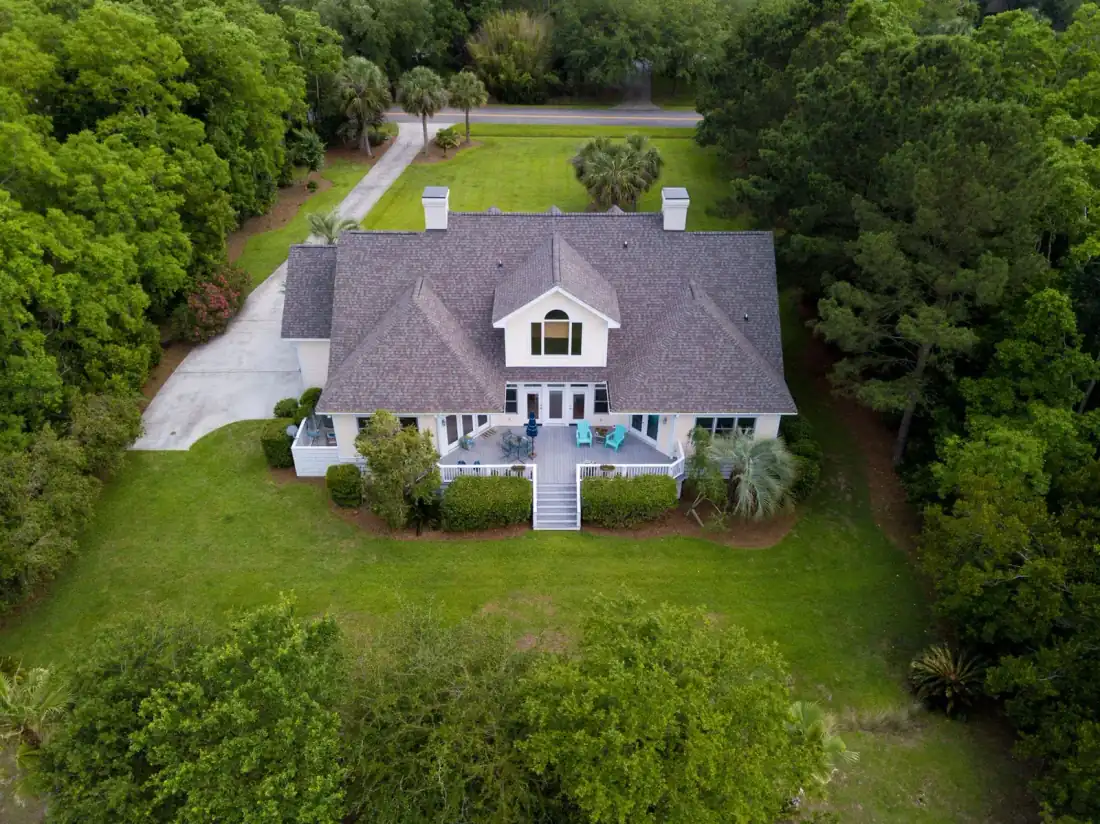
Almost every family that calls us about a custom home has the same browser tab open: a resale listing a few miles away that costs far less than the number we are about to quote. In Hernando County, the median sale price of an existing single-family home was $315,000 in March 2026, according to Florida Realtors data published by the local Realtor association. A mid-range custom home on its own lot in the Brooksville area, using the budget math from our own cost guide, lands well above that. On the sticker price alone, buying wins almost every time.
But the sticker price is not what you actually pay over the years you live in the house. A 25-year-old block home comes with a roof clock, an air conditioning clock, a window question, an insurance question and a layout that may or may not fit how you live. A new home comes with a higher entry price, a construction timeline and a lot to find, but very few of those near-term bills. The honest comparison is the 10-year cost of each path for the same family, not the listing price against a construction quote.
This guide walks through that comparison the way we walk through it with clients in Hernando, Pasco and Citrus counties: what each path costs up front, what the existing home will need in the first decade, how insurance and property taxes differ, and a worked example showing when a $600,000 custom build can beat a $450,000 existing home on 10-year value, and when it does not.
What Buying an Existing Home Costs in 2026
The resale market in our area has cooled from its peak. The Hernando County median of $315,000 in March 2026 was down from $334,990 a year earlier, and closed sales slipped slightly. Zillow's home value index for Hernando put the typical home value around $353,000 in August 2026, slightly down year over year. Different measures, same direction: prices have flattened, and buyers have more room to negotiate than they did in 2022.
That median, though, describes the whole market, including older, smaller homes. A family comparing resale to a new 2,000 square foot, 3 or 4 bedroom home with a modern layout is usually shopping above the median, often in the $400,000 to $475,000 range for something comparable in size and lot. That is the number to hold against a build, not the county median.
On top of the price, buying brings its own transaction costs:
- Closing costs: title insurance, lender fees, prepaid taxes and insurance, typically a few percent of the price depending on financing.
- Inspections: a general home inspection, wind mitigation and four-point inspections for insurance, plus a sinkhole or WDO inspection where relevant.
- Immediate fixes: the items the inspection turns up that the seller will not cover, which on older homes often include roof, water heater, electrical panel or plumbing repairs.
- Move-in changes: paint, flooring, kitchen or bath updates that make the house livable for your family.
What Building a Custom Home Costs in 2026
Our custom home cost guide for Hernando County breaks the numbers down in detail. The short version: builder-grade construction runs about $150 to $200 per square foot, mid-range custom $200 to $275, and high-end custom $250 to $400, with most Hernando families landing between $200 and $275. A 2,000 square foot home at that rate is $400,000 to $550,000 for the vertical build alone.
Then come the costs that are easy to forget when comparing against a listing price:
- Land: a finished lot in an established Brooksville subdivision can run around $65,000, while rural acreage is cheaper per acre but needs utilities.
- Site work and utilities: clearing, fill, driveway, and well and septic where there is no public water or sewer. Two lots a mile apart can differ by $40,000 because one has utilities at the street.
- Plans, engineering and permits: architectural plans and engineering, survey and soil test, county permit fees and impact fees for schools, roads, parks and fire.
- Construction financing: interest on a construction loan during the build, plus the cost of renting or carrying your current home until you move.
In our sample budget for a mid-range 2,000 square foot home on a half-acre lot in the Brooksville area, the full project reached roughly $660,000 to $730,000 all-in. A simpler plan, a smaller footprint or a lower finish level can bring a build closer to $550,000 to $600,000. Either way, the up-front gap against a comparable resale home is real: often $150,000 or more.
The Hidden 10-Year Bill on an Existing Florida Home
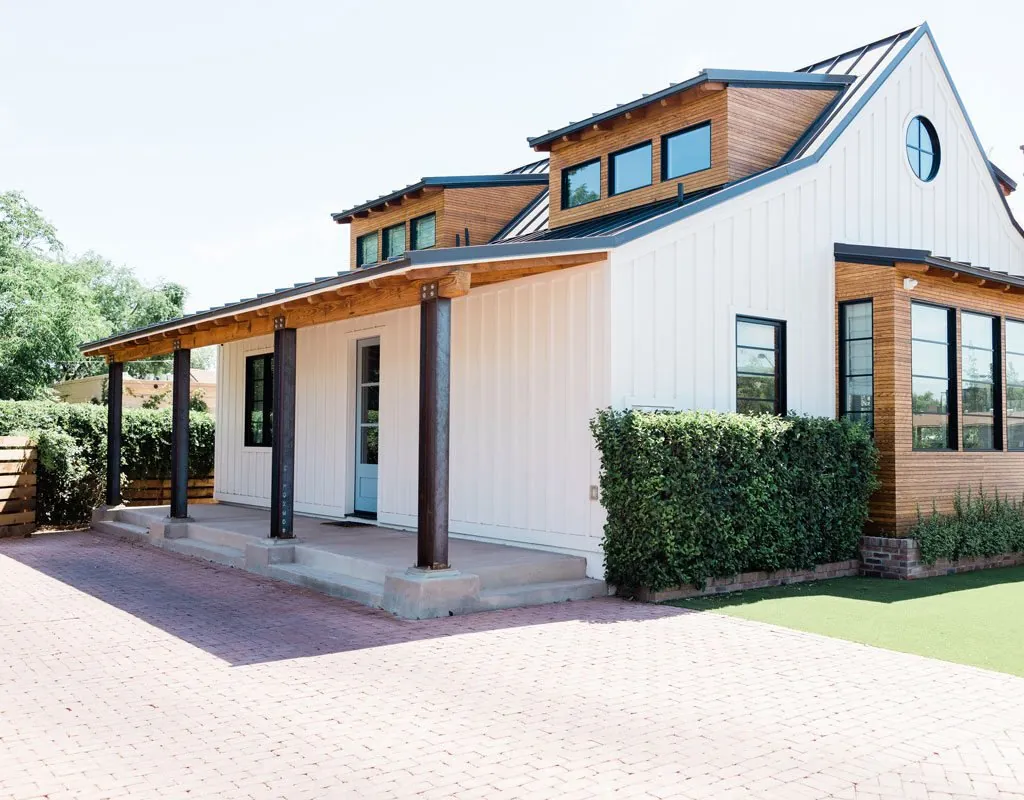
The reason the build vs buy question is not settled by the sticker price is that older Florida homes come with predictable, large expenses that a new home does not have in its first decade. These are not surprises. They are clocks, and the inspection tells you how much time is left on each:
- Roof: a shingle roof that is 15 years or older affects insurance as well as leaks. Under Florida law, insurers cannot refuse to write or renew a policy solely because a roof is under 15 years old, but older roofs face inspections and, often, a replacement requirement or an actual cash value roof endorsement. A full shingle roof replacement on a typical home is a five-figure bill.
- Air conditioning: Florida systems work hard year-round. A system near the end of its life means a replacement in the first few years of ownership.
- Windows and openings: homes built before the modern wind codes often have non-impact windows and garage doors. Upgrading to impact-rated openings improves protection and insurance credits but costs thousands per opening set.
- Plumbing and electrical: older galvanized or polybutylene plumbing and outdated electrical panels can be flagged by insurers and may need replacement.
- Layout and efficiency: older homes often have smaller kitchens, closed floor plans, less insulation and single-pane or older double-pane windows. Remodeling to a modern layout is often the largest cost of all, and our guide to tear down and rebuild vs remodel covers when that remodel stops making sense.
Add those up for a 20 to 30-year-old home and the first-decade capital bill can easily reach $40,000 to $100,000 or more, depending on how many clocks are close to zero at closing. That money is spent on bringing the house to where a new home starts, not on adding anything new.
Insurance: Why New Construction Often Costs Less to Cover
Home insurance is one of the biggest monthly costs of owning in Florida, and it is where new construction has a structural advantage. A new home built to the current Florida Building Code has a new roof, modern roof-to-wall connections, a secondary water barrier and, in most cases, impact-rated windows and doors. Those are exactly the features a wind mitigation inspection looks for, and they can qualify for significant premium credits.
An older home can earn some of those credits through retrofits, but each one costs money and some, like roof-to-wall connections, are hard to upgrade without a new roof. Older homes also face four-point inspections on roof, electrical, plumbing and HVAC, and some carriers decline older homes outright or offer reduced roof coverage. We do not quote premiums because they depend on the carrier, the location and the coverage, but in practice many of our clients see a meaningful difference between a quote on a new home and a quote on a 25-year-old resale with the same coverage.
Flood zone matters as much as age. A new home designed to the current base flood elevation for its lot is built to today's flood standards from day one, while an older home in a flood zone may sit lower than current rules require.
Property Taxes, Homestead and Save Our Homes
Property taxes work differently for a new home and for a resale, and the rules matter for anyone moving within Florida:
- Homestead exemption: qualifying owners can receive up to $51,411 in homestead exemption for the 2026 tax year, whether the home is new or existing.
- Save Our Homes cap: once a home is homesteaded, annual increases in its assessed value are capped at 3% or the change in the Consumer Price Index, whichever is lower.
- Reset on purchase: when you buy an existing home, its assessment resets to market value. A new build is assessed at its full new value once completed. Neither path inherits the seller's low assessment.
- Portability: Florida homeowners leaving a homestead can transfer up to $500,000 of their accumulated Save Our Homes benefit to a new homestead, new or existing, if they qualify within the time window set by law.
- Amendment 3: a proposed constitutional amendment on the November 3, 2026 ballot would raise the non-school homestead exemption and lower the cap on non-homestead assessment increases. It needs 60% voter approval and, if passed, would take effect January 1, 2027.
Because a custom home is usually assessed at a higher value than a comparable older home, the tax bill on a new build is typically higher in the first years. That belongs in the 10-year comparison, alongside the savings on insurance and repairs.
A 10-Year Planning Example: $600,000 Build vs $450,000 Resale
Here is how the comparison looks for one family. This is a planning example built from typical ranges, not a quote, and your numbers will differ. The family is choosing between a 25-year-old, 2,000 square foot resale home in Spring Hill at $450,000 and a new 2,000 square foot custom home on a purchased lot at $600,000 all-in.
- Up-front difference: the build costs $150,000 more on day one.
- First-decade capital items on the resale: roof replacement, AC replacement, impact windows and a water heater, plus a kitchen and bath refresh to bring the layout up to date. In this example we use $90,000 spread over the first 6 years.
- Insurance: if the new home qualifies for full wind mitigation credits and a lower base rate, a difference of $1,500 to $2,500 a year is a plausible planning assumption, or $15,000 to $25,000 over 10 years.
- Maintenance and energy: new systems, better insulation and a new envelope typically mean lower energy and repair bills. We use $1,000 a year, or $10,000 over 10 years.
- Property taxes: the new home's higher assessed value adds cost. We use $1,500 a year more, or $15,000 over 10 years.
Net it out and the resale path costs about $450,000 plus $90,000 in capital items, about $540,000 in money put into the house over 10 years, before comparing ongoing costs. The build path costs $600,000, and the ongoing differences (insurance and maintenance savings minus extra taxes) swing roughly $10,000 to $20,000 in the build's favor. The cash gap shrinks from $150,000 to roughly $40,000 to $50,000.
Then look at what each family owns at year 10. The resale owner has a 35-year-old home with some new systems and an older structure and layout. The build owner has a 10-year-old home with a modern plan, current code construction and the roof and systems still mid-life. In many neighborhoods that difference in value is more than the remaining cash gap, which is when the build wins on 10-year value. In others, especially where the resale is in great condition or the lot costs a lot more, buying stays ahead.
When Buying an Existing Home Is the Smarter Move
We build homes for a living, and we still tell some families to buy. Buying usually wins when:
- You need to move soon: a custom home typically takes several months of design and permitting before construction, and roughly a year of construction after that. Census construction data puts a contractor-built home at roughly 12 months from start to completion.
- The resale has been updated: a home with a newer roof, newer AC, impact windows and a modern kitchen has already paid most of the first-decade bill.
- Location beats house: if the neighborhood, school zone or waterfront you want has no available lots, buying is the only way in, and a later remodel may be the right path.
- Budget is fixed at the median: if the most you can spend is close to the county median, a resale gives you more house for the money today.
When Building Wins
- The resale needs everything: when the inspection shows roof, AC, windows and layout all near the end of their life, the 10-year cash gap narrows fast.
- You plan to stay: the longer you stay, the more the insurance, maintenance and energy savings add up and the more the new home's value holds.
- You want a specific plan: multigenerational layouts, a large garage or workshop, accessibility features or a specific lot orientation are hard to find in resale stock.
- You already own land: a family that owns a lot or acreage removes one of the biggest costs of building, and the comparison often flips.
- You care about storm resilience: a new home built to the current wind and flood codes starts with protection an older home has to pay to add.
Florida also now requires every builder of a newly constructed home to provide a one-year warranty against construction defects, under section 553.837 of the Florida Statutes, effective July 1, 2025. Resale homes are sold with no comparable builder warranty, which is one more line in the comparison.
How to Run the Numbers for Your Own Family
The comparison only works with your real numbers. Before deciding, gather these:
- Two or three real resale candidates: with inspection reports, roof and AC ages, insurance quotes and the cost of the updates you would make.
- A lot or land option: with confirmed utilities, flood zone, soil and setbacks. Our Brooksville lot buying guide lists what to check.
- A real build estimate: based on a plan and finish level you actually want, including site work, permits and impact fees.
- Insurance quotes for both: on the same coverage, so the difference is real and not a guess.
- Your time horizon: how long you expect to live in the home, because it decides how much the ongoing savings matter.
Protech Construction: Pricing Both Paths Honestly
Protech Construction Services LLC is a licensed Florida contractor, CBC1268979, based at 9035 Jayson Dr, Brooksville, FL 34613. Our custom home building team prices a build on your lot or a lot you are considering, with every line item from site work to impact fees, so you can hold it against the resale you are looking at. If you want to start from a proven layout, our home floor plans include the Aspen, Designer Aspen and Linleigh models, and our custom floor plans service adapts them or starts from scratch.
If you are leaning toward buying and updating instead, our home remodeling team can price the updates on the resale so the comparison is apples to apples. We build across Hernando, Pasco and Citrus counties, including new construction in Brooksville, Spring Hill, Hudson, Dade City, New Port Richey and Crystal River. Call (352) 710-5455 and we will help you run the 10-year math for your family, with real numbers on both sides.
FAQ
Frequently Asked Questions
Is it cheaper to build or buy a house in Florida in 2026?
+
How much does it cost to build a house in Hernando County?
+
Is homeowners insurance cheaper on a new house in Florida?
+
Do property taxes go up when you build a new house in Florida?
+
How long does it take to build a custom home in Florida?
+
When does buying an existing home make more sense than building?
+
Keep Reading
More articles from the Protech Construction blog

Tear Down and Rebuild vs Remodel in Florida: The Break-Even Point Where Rebuilding Wins
Remodel or tear down and rebuild? Here is what each path costs in Florida, the FEMA 50 percent rule and wind code factors that tip the scale and a planning example that shows where rebuilding starts to win.
Read Article
Adding a Second Story in Florida: Why Foundation and Wind Load Make It Cost More Than You Think
Adding a second story in Florida often costs more per square foot than building out or even building new. Here is what drives the price, from footing reinforcement and hurricane wind load to the FEMA 50 percent rule, with 2026 planning ranges.
Read ArticleBarndominiums in Florida: What a Post-Frame or Block Barndo Really Costs to Build to Code in 2027
A finished barndominium in Florida typically costs about $130 to $200 per square foot before land, well, septic and fees. Here is how shell and finished pricing differ, what Florida wind code adds and a sample budget for a rural Hernando lot.
Read ArticleReady to Build?
Get your free evaluation today.
No-pressure consultation. We serve Hernando, Pasco, and Citrus counties. Call us now or request a visit online.