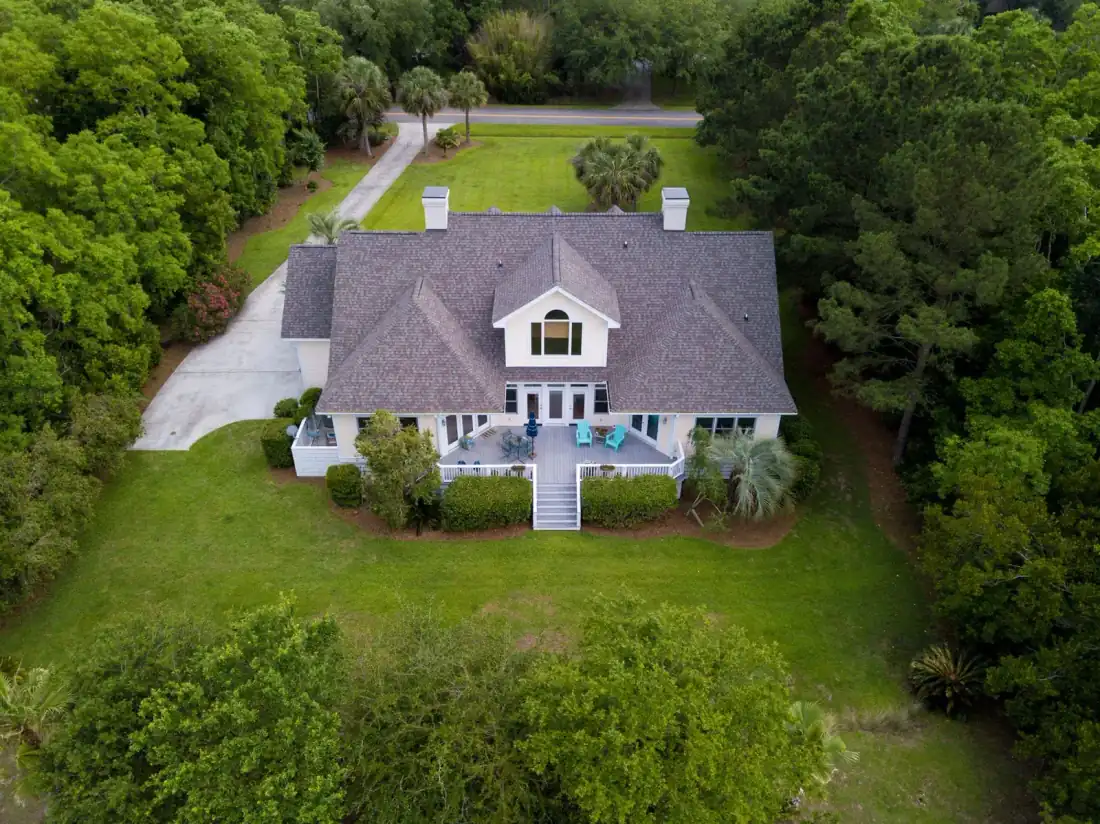
Protech Construction Services LLC (license CBC1268979) builds custom homes and additions across Hernando, Pasco, and Citrus counties, and the high-performance envelope is the upgrade we get asked about most and see quoted most dishonestly. The pitch is always the same: insulated concrete forms, closed-cell spray foam, impact glass, and a payback period short enough to make the decision obvious. The arithmetic does not support the pitch. Using current Florida electricity rates, documented ICF energy studies and real statewide wind mitigation credit averages, the full package on a 2,400 square foot build costs $28,000 to $67,000 and returns roughly $1,700 to $2,300 per year. That is a simple payback of 12 to 40 years, with a realistic midpoint above 20. We still recommend most of it, and this article explains both halves of that sentence: what the numbers really are, and why payback is the wrong question in a state where insurability is becoming the binding constraint.
What Energy-Efficient Legally Means in Florida Right Now
Before comparing upgrades it helps to know where the floor sits, because a large share of what gets marketed as an efficiency feature is simply current code. The 8th Edition of the Florida Building Code is based on the 2021 International Energy Conservation Code, and it raised the bar on insulation, air sealing and mechanical equipment efficiency across the board. The residential Energy Performance Index was tightened from 100 to 95, which means a home built to today's minimum is measurably tighter than one built to the previous cycle.
Two verification requirements matter more than the numbers themselves, because they changed the enforcement from paperwork to measurement.
- Blower door testing: Mandatory on all new residential construction. A third party pressurizes the house and measures the actual air leakage rate, so a builder can no longer claim a tight envelope without proving it.
- Duct leakage testing: Also mandatory. Leaky ducts in a hot attic are the single most expensive defect in Florida residential construction, because they dump conditioned air into an unconditioned space and pull humid attic air into the return.
The practical consequence for a buyer is that the baseline is already decent. When a builder describes a code-minimum home as energy efficient, they are not lying, they are just describing the law. The upgrades below are what sits above that line, and each one needs to justify itself against a floor that keeps rising as code cycles advance.
The Three Upgrades That Actually Move the Number
Dozens of features get marketed as efficiency upgrades. Three of them move enough energy and enough insurance premium to be worth arguing about on a Florida custom build.
- Insulated concrete forms for the shell: Stay-in-place foam forms filled with reinforced concrete, producing a continuous insulation layer on both faces of a structural wall. Documented studies show an ICF home requiring roughly 32 percent less energy to cool and 44 percent less to heat than an equivalent wood-framed house, with the wall assembly delivering substantially greater effective R-value.
- Closed-cell spray foam at the roof deck: Moves the thermal boundary from the ceiling up to the roof deck, which brings the ductwork and air handler inside conditioned space. In Florida this is often worth more than the R-value itself, because it removes the attic temperature extreme that drives duct losses.
- Impact-rated glazing: Laminated impact windows and doors, which carry meaningful thermal benefit through low-emissivity coatings and improved frames, but earn most of their return through insurance credits and the fact that they work without anyone being home to install shutters.
Notice what is missing from that list. High-efficiency equipment matters, but it is replaced two or three times over the life of the house, so it is an operating decision rather than a build decision. The envelope is the part you only get one honest shot at, which is the real argument for spending there during construction. Our Hernando County cost-to-build guide covers how these choices sit inside a full budget.
What the Package Costs on a 2,400 Square Foot Build
Here are the premiums, meaning the cost above a code-compliant baseline rather than the total cost of each item. This is where most comparisons go wrong: quoting the full price of impact windows against zero, when the alternative is not an empty hole but a code-compliant window plus shutters.
- ICF shell over concrete block: ICF construction typically runs 2 to 8 percent higher upfront than traditional block in Florida. On a 2,400 square foot build that premium commonly lands between $10,000 and $25,000, depending on wall area, opening count and how familiar the local crews are with the system.
- Closed-cell foam over code-minimum attic insulation: Closed-cell spray foam runs roughly $2.00 to $4.75 per square foot of applied area and open-cell about $1.50 to $3.50. Applied at the roof deck instead of batt at the ceiling, the upgrade on a home this size commonly adds $6,000 to $12,000.
- Impact glazing over code-compliant non-impact plus shutters: Installed impact windows run about $1,000 to $3,800 per opening. A 2,400 square foot home usually has 18 to 22 openings, and the premium over the shuttered alternative commonly lands between $12,000 and $30,000 depending on size, shape and whether any openings are architectural.
Added up, the realistic band is $28,000 to $67,000, with a typical mid case around $45,000. The spread is wide because opening count and wall area vary enormously between floor plans with the same interior square footage. A long, narrow plan with a lot of glass costs far more to upgrade than a compact plan with the same living area, which is one reason we look at the floor plan before quoting any envelope package.
What It Returns Every Year: Energy
Start with the actual cost of power. The average Florida household consumes about 1,247 kWh per month, and the state residential rate sits near 15.4 cents per kWh as of mid-2026, producing a bill around $177 per month or roughly $2,124 per year. A new 2,400 square foot custom home usually runs somewhat above the state average because it is larger than the typical housing unit, so call the code-baseline electric bill $2,400 to $3,000 per year.
Now apply the envelope. The documented ICF figure is roughly 32 percent less cooling energy, and cooling dominates the Florida load. Foam at the roof deck adds real savings by pulling ducts into conditioned space, and low-emissivity impact glass contributes a smaller share. Stacking them, a 25 to 35 percent reduction in total electric consumption is a defensible expectation for the full package.
On a $2,700 baseline bill, that is roughly $675 to $945 per year. Call it $800 in the middle. This is the number most worth scrutinizing when a builder hands you a proposal, because it is the one that gets inflated most freely. Claims of 50 or 60 percent whole-home savings generally come from comparing an upgraded house against a wood-framed home built to an older code cycle, not against what Florida law requires today.
What It Returns Every Year: Insurance
The insurance line is the one Florida homeowners underestimate, and in 2026 it is doing more work than the energy line. Florida homeowners who complete wind mitigation improvements save an average of over $900 per year on premiums, and the credited features map closely onto what a high-performance envelope already includes: opening protection, roof-to-wall connection strength, roof deck attachment and roof covering compliance.
On a new build specified for full credits from the start, the realistic band is $900 to $1,400 per year, and it tends to grow rather than shrink, because Florida premiums have been rising and a percentage credit against a rising number is worth more each year. That directional advantage is genuinely different from the energy line, where utility rates rise more slowly and efficiency savings stay roughly flat in real terms.
One caution: the credit is not automatic. It follows a wind mitigation inspection form, and features that were built but never documented earn nothing. Insist that the inspection happen at completion and that the report goes to the carrier before the first policy is bound. Homes we build to the current Florida wind code already carry most of the structural credits, so the documentation step is usually the only thing standing between a homeowner and the discount.
The Honest Payback Math
Put the two together. Total annual return runs roughly $1,700 to $2,300, combining $675 to $945 in energy and $900 to $1,400 in insurance. Against a package premium of $28,000 to $67,000, the simple payback works out like this.
- Best case: A $28,000 premium returning $2,300 per year pays back in about 12 years. This requires a compact plan, modest opening count and a carrier that credits generously.
- Mid case: A $45,000 premium returning $2,000 per year pays back in about 22 years. This is the outcome most Hernando and Pasco custom builds will actually see.
- Worst case: A $67,000 premium returning $1,700 per year pays back in about 39 years, which is longer than the service life of several components inside it.
That is the number, and it is nowhere near the six-year payback that gets advertised for impact windows or the ten-year figures attached to full envelope packages. Those claims are typically built by comparing against an obsolete baseline, by counting the full window price as if the alternative were free, or by assuming energy savings two or three times what the code-minimum comparison supports. If a builder shows you a payback under ten years, ask which baseline they compared against and what electricity rate they used. The answer is usually the whole explanation.
Why Payback Is Still the Wrong Question in Florida
Here is the part that makes us recommend most of this package anyway. Simple payback assumes the alternative is available, and in Florida that assumption is weakening. Carriers have been tightening residential underwriting for several years, and opening protection has moved from a discount item toward a condition of coverage in a growing share of the market. A home that cannot be insured affordably is not a cheaper home, it is a harder home to sell and to finance.
Three arguments survive the payback math intact.
- Insurability, not just premium: The credit is measurable today, but the underlying trend is toward carriers pricing or declining risk based on these features. Building them in is partly a hedge against a market that is still moving.
- Comfort and humidity control: Neither shows up in a payback calculation, and both are the reason homeowners who have lived in a tight Florida house rarely go back. Duct work inside conditioned space and a continuously insulated shell produce steadier temperatures room to room and lower indoor humidity, which is the actual complaint behind most Florida comfort problems.
- Storm performance: A single avoided opening breach changes the arithmetic completely. Once wind enters through a failed window, internal pressure works against the roof from the inside, and that failure mode is what turns a repairable house into a total loss.
None of those are financial returns you can put in a spreadsheet, which is precisely why the honest sales pitch is not a payback number. It is that the package buys resilience and comfort at a slow but real financial return, and that the resilience half is the part that matters most in this state.
Financing It: What It Does to the Monthly Payment
Most custom home buyers are not writing a separate check for the envelope, they are rolling it into the construction loan and then the permanent mortgage. That changes the framing from payback to monthly cash flow, and the comparison is worth running before deciding.
A $45,000 package financed over 30 years at 6.5 percent, used here purely for illustration, adds roughly $284 per month to the payment. The annual return of about $2,000 works out to roughly $167 per month. So the upgraded home is cash-flow negative by around $117 per month on day one, and it stays that way until either premiums rise, rates fall on a refinance, or the mortgage is paid off.
That is not an argument against it, but it is an argument for sequencing. Buyers who need the monthly payment to work should spec the highest-return components first rather than taking the full package, and our construction-to-permanent loan guide walks through how the draw schedule and permanent financing interact when upgrades are involved.
Retrofit Versus Build-In: The Rule That Decides Everything
The reason this decision is worth agonizing over now rather than later is that none of it retrofits cheaply. Wall insulation strategy cannot be changed after the shell is up without demolition. Moving the thermal boundary to the roof deck after the fact means removing existing attic insulation, remediating whatever grew in it, and working in a confined hot space, which commonly runs two to three times the cost of doing it during construction, when a typical attic retrofit alone lands between $1,700 and $7,500 depending on area and foam type.
Windows are the only component that retrofits with any grace, and even there the replacement cost is meaningfully higher than the build-time premium because the opening has to be prepped, flashed and finished twice. That asymmetry is the real reason to decide during design: not because the payback is fast, but because the option disappears once the walls close. This is also true of the low-voltage decisions covered in our pre-wire checklist, and the same logic applies.
What We Would Spec First on a Capped Budget
If the envelope budget is limited, the order is not the order most brochures suggest, because the components differ sharply in return per dollar.
- First, impact glazing on every opening: It carries the largest insurance credit per dollar, it is the component that protects against the failure mode that causes total losses, and it functions without anyone being home. This is where the first dollar goes on nearly every build.
- Second, closed-cell foam at the roof deck: Moderate cost, immediate comfort improvement, and it fixes the duct problem rather than insulating around it. It is also the component that retrofits worst, which raises its priority at build time.
- Third, the ICF shell: Genuinely excellent and genuinely the most expensive premium of the three. On a capped budget it is the one to defer, because a well-detailed block wall with proper insulation and air sealing closes much of the gap for less money.
- Fourth, everything else: Radiant barriers, premium equipment tiers and glazing upgrades beyond low-emissivity all have real effects, and all of them are small next to the three above.
The one thing we would not do is spread the budget thinly across all four to make a brochure look complete. Half-measures on the envelope produce a house that costs more and performs like the baseline, which is the worst outcome available. We build across Hernando County, including Spring Hill, and into Pasco County, and the right package differs by lot, plan and carrier.
What Gets Sold and Does Not Pay Off
A few items appear on efficiency proposals regularly and do not survive scrutiny in a Florida climate zone.
- Heavy heating-focused upgrades: Specifications imported from northern climate zones optimize for a heating load Florida barely has. Cooling and dehumidification are the problems here, and a package tuned for winter spends money in the wrong place.
- Radiant barrier as a substitute for air sealing: It is inexpensive and helps modestly, but it is frequently sold as an alternative to fixing duct leakage and envelope tightness. It is not one.
- Oversized cooling equipment marketed as high performance: An oversized system short-cycles, which means it cools quickly, shuts off before removing enough moisture, and leaves the house cold and clammy. Correct sizing beats a higher efficiency rating on a wrong-sized unit every time.
The pattern across all three is the same: they are additions bolted onto a design rather than decisions made about the envelope. If you want the shortest possible version of this article, it is that the envelope decisions are worth making carefully during design and the equipment decisions can wait. Every custom home we build gets this conversation before the shell is priced. To run the numbers against your actual plan and lot, call (352) 710-5455 or reach us through the contact page, and we will put the premium and the credit side by side before anything is ordered.
FAQ
Frequently Asked Questions
Do ICF, spray foam and impact windows really pay for themselves in a Florida home?
+
How much energy does an ICF home actually save in Florida?
+
What does the Florida Building Code already require for energy efficiency?
+
Which envelope upgrade should I buy first if my budget is limited?
+
Can I add these upgrades later instead of during construction?
+
How much do wind mitigation credits actually lower a Florida insurance premium?
+
Keep Reading
More articles from the Protech Construction blog
Modular vs Stick-Built Custom Homes in Florida 2027
The modular per-square-foot number is the box, not the house. Once foundation, utilities, crane set and Florida wind code are priced, the gap narrows sharply. And the appraisal penalty everyone warns about is not the rule people think it is.
Read ArticleProduction vs Custom Home Builder in Florida Compared
The three builder tiers are not three price points for the same house. They are three different products, on three different pieces of land, sold under three different contracts, and comparing them by price per square foot is how buyers get the decision wrong.
Read Article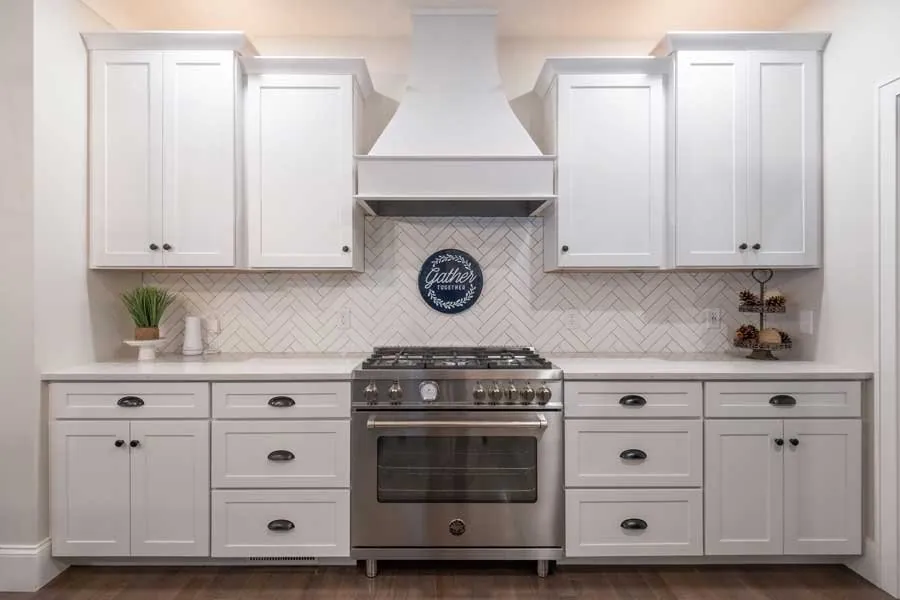
Custom Cabinets in Florida 2027: Wood Species and Cost
Florida interiors sit near 11 percent equilibrium moisture content while the rest of the country sits at 6 to 8. That single number is why cabinet doors that were fine in Ohio warp in Hernando County, and why species selection here is engineering rather than decorating.
Read ArticleReady to Build?
Get your free evaluation today.
No-pressure consultation. We serve Hernando, Pasco, and Citrus counties. Call us now or request a visit online.