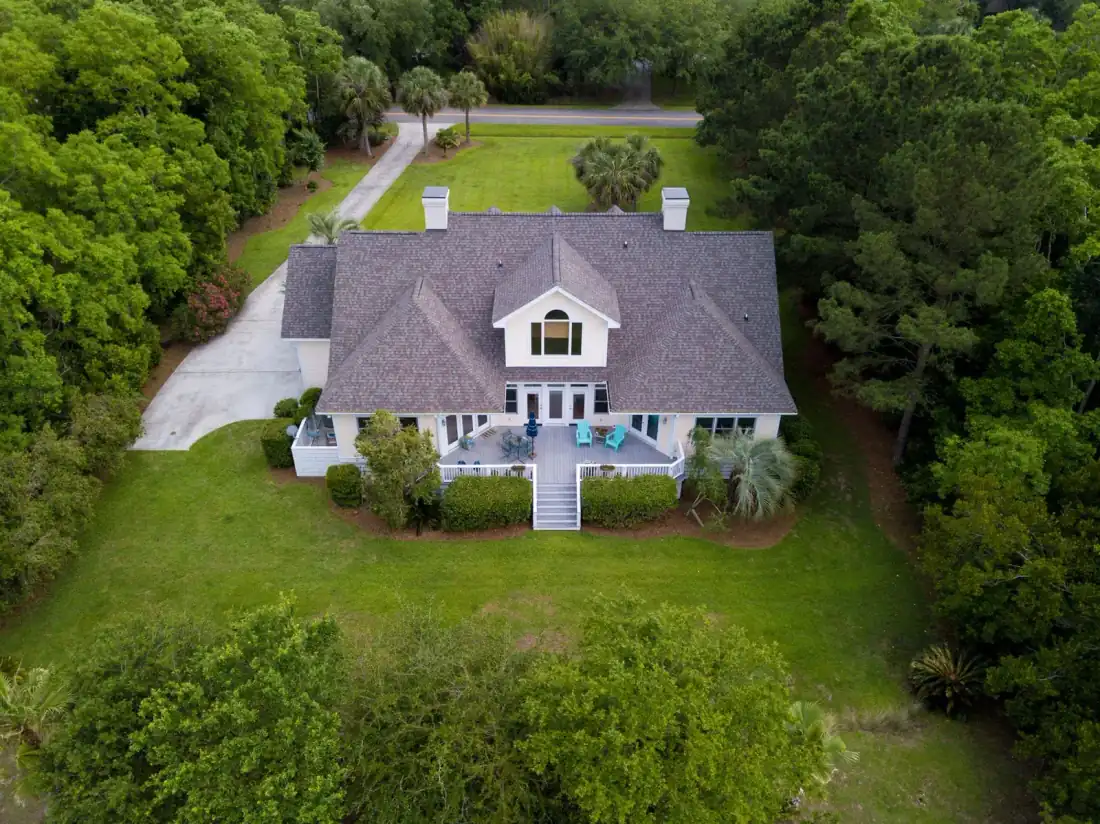
Protech Construction Services LLC (license CBC1268979) builds custom homes and additions across Hernando, Pasco, and Citrus counties, and the low-voltage decision homeowners regret most is the one they never made. Pre-wiring a new home for network, video, and audio is cheap while the walls are open and expensive once they are closed. The numbers are not close: essential structured wiring runs about $3,000 to $8,000 during construction, and the same infrastructure fished into finished walls later runs $10,000 to $25,000 or more once you count the cutting, patching, and repainting. This is the checklist of what to run before the drywall, and why the empty pipe in the wall is worth more than the cable inside it.
Why Pre-Wiring During Construction Is the Cheapest It Will Ever Be
There is exactly one window in a home's life when a cable run costs almost nothing: the rough-in stage, after the framing and before the insulation and drywall. At that point a low-voltage installer walks open stud bays and staples cable straight to the framing, with no wall to cut and no finish to repair. The same run six months later means finding the cavity, cutting drywall, fishing the cable blind, patching the hole, and repainting the wall, on every drop.
That difference is why pre-wiring during construction saves roughly 60 to 80 percent versus retrofitting the identical infrastructure into a finished house. It is not a small optimization, it is the whole ballgame. A homeowner who skips the pre-wire to save a few thousand dollars on the build is choosing to spend three to five times that amount later, or more likely to live with weak Wi-Fi and no wired backbone because the retrofit never happens. Getting this right is part of scoping a build correctly, the same way we handle every decision on a custom home building project before a wall closes.
The Numbers: $3,000 to $8,000 Now Versus $10,000 to $25,000 Later
Put real figures on it. Professional smart home pre-wiring for new construction costs about $3,000 to $8,000 for an essential structured-wiring package, and $8,000 to $15,000 or more for a comprehensive, automation-ready system with camera, speaker, and sensor rough-in throughout. On a per-square-foot basis that lands around $2 to $8 depending on how many devices you plan for. During an open-wall rough-in, each Ethernet drop runs roughly $150 to $250 installed and tested, well below the $125 to $400 a finished-wall drop commands.
Now the other side. Retrofitting that same wiring after drywall is up costs $10,000 to $25,000 or more, because every run requires cutting into finished walls, fishing the cable, patching, and repainting. The gap between the two paths routinely exceeds $15,000 on a normal home, which is where the rule of thumb comes from: a few thousand dollars now saves close to twenty later. Pre-wiring also pays back at sale, adding an estimated $10,000 to $17,500 in resale value on a modern home where buyers expect a wired backbone. It is one of the rare build choices that is cheaper up front and worth more at the end. We treat it as core scope on any home addition that touches the walls, not an upgrade to argue about later.
The Pre-Wire Checklist: What to Run Before the Drywall
Here is the list to hand your builder before the low-voltage rough-in. It costs little to add a run while the bay is open, so err toward more.
- Cat6a Ethernet to every room: Run at least one, ideally two, Cat6a drops to each bedroom, office, and living area, plus ceiling drops for wireless access points. Cat6a (23 AWG, 500 MHz) is the 2026 standard and costs about $0.20 per foot for the cable itself.
- Home-run topology: Every cable returns to one central closet, not daisy-chained room to room. Home runs let you patch, test, and repurpose any drop without touching the rest of the house.
- Conduit or smurf tube to key walls: Empty flexible conduit from the closet to the media wall, the attic, and a couple of far corners. It is the cheapest future-proofing there is, at roughly $0.90 to $3 per foot.
- RG6 quad-shield coax: Still worth running to the media wall and one or two rooms for antenna or cable service, about $0.25 per foot.
- Speaker wire for whole-home audio: 14-gauge two-conductor speaker wire to ceiling or wall locations in the main living areas and primary suite for a system like Sonos or in-ceiling audio.
- Low-voltage rough-in for cameras and doorbell: Cat6a to each eave corner and the front door powers modern PoE cameras and a video doorbell without a separate power run.
- A wired backbone for access points: Ceiling-mounted Wi-Fi access points on Cat6a beat a single router every time, and the wire has to be there before the ceiling closes.
Notice that almost every line is the same cable, Cat6a, doing several jobs. That is the modern approach: run a lot of one good cable and a few empty pipes, and let the devices sort themselves out over the next two decades.
Cat6a, Conduit, and Why the Empty Pipe Matters Most
If you take one idea from this guide, make it this: the empty conduit is worth more than the cable. Cable standards change. Cat5e became Cat6 became Cat6a, and fiber to the room is coming. Nobody can name the cable a house will want in 2040. But a home that has empty conduit from a central closet to its key walls can pull whatever that cable turns out to be, in an afternoon, without opening a single wall.
So the strategy is two-part. Run generous Cat6a now for everything you know you need, because it is cheap and it handles multi-gigabit networking, PoE cameras, and access points today. And run empty conduit to the places you cannot predict, so the house can be upgraded later without a demolition project. That combination costs very little at rough-in and permanently taps the option to modernize. Skipping the conduit is the false economy that turns a future upgrade back into a $20,000 retrofit.
The Network Closet: The Brain of the Wired Home
Every wired home needs one place where the cables land, and planning it during the build is free while adding it later is a headache. A structured media enclosure or a small dedicated closet houses the patch panel where every home-run cable terminates, the network switch, the router or modem, and a power supply, ideally on a small battery backup so the network survives a brief outage.
- Location: Central to the home and out of the heat. A conditioned interior closet beats a hot garage or attic, because network gear runs cooler and lasts longer indoors.
- Power and space: Two or three dedicated outlets and enough depth for a switch and a shelf. Plan for more ports than you think you need, since drops multiply over time.
- Ventilation: A closed closet full of electronics needs airflow. A vented door or a small fan keeps temperatures in check.
- Room to grow: Leave space for a second switch and a rack. The house that adds cameras and access points fills a media panel fast.
This is the kind of detail that separates a build planned as a system from one assembled room by room. It is the same discipline we bring to mechanicals and layout on a home remodeling project, where the parts you never see decide how well the parts you do see actually work.
Where Builders and Homeowners Get Pre-Wire Wrong
The most common mistake is treating low voltage as an afterthought handed to whoever is cheapest, scheduled after the drywall is already going up. By then the window is closed and the savings are gone. The second mistake is running too little: a single Ethernet drop per room, no ceiling runs for access points, and no conduit, which leaves the home dated the day it is finished.
The third is skipping the conduit to save a few dollars, which trades a tiny rough-in cost for a full retrofit later. The fourth is putting the network closet in an unconditioned garage or attic, where heat shortens the life of every device in it. And the fifth is failing to label and document the runs, so a perfectly good pre-wire becomes a guessing game the first time someone opens the panel. Each of these is avoidable, and all of them are cheaper to prevent than to fix. Coordinating the low-voltage trade into the build schedule, alongside framing and electrical, is exactly the kind of sequencing we manage on a build, the same way we plan structure to meet the Florida hurricane wind code.
Pre-Wire as Part of the Build, Not an Afterthought
Protech Construction Services LLC is a licensed Florida general contractor, license CBC1268979, based at 9035 Jayson Dr, Brooksville FL 34613, building custom homes and additions across Hernando, Pasco, and Citrus counties. When we build, low voltage is planned with the framing and electrical, not bolted on at the end, so the finished home has the wired backbone modern living assumes and the empty conduit to carry it forward.
If you are planning a new home or a major addition, decide the pre-wire before the walls close, when it costs the least it ever will. Call (352) 710-5455 or request a consultation, and we will scope the structured wiring into the build from the start. You can also see how we work across the Hernando County service area and what to expect on the budget in our guide to the cost to build a custom home in Hernando County.
FAQ
Frequently Asked Questions
How much does it cost to pre-wire a new home for a smart home in 2026?
+
Is it worth pre-wiring instead of going wireless?
+
How much does retrofitting wiring cost after the house is built?
+
What cable should I run in a new home in 2026?
+
Why does the empty conduit matter more than the cable?
+
Where should the network closet go in a new house?
+
Keep Reading
More articles from the Protech Construction blog
Multigenerational Home Layouts in Florida: 6 Plan Moves
Nearly every production floor plan in Central Florida is a split-bedroom 3/2 designed for a nuclear family, and dropping three generations into it fails in predictable places: one shared wall, two bathrooms, one thermostat, and a great room that everyone has to walk through. Here are the six plan decisions that actually buy privacy, what each one adds to a build budget, and the single line in Florida statute that turns a suite into a second dwelling unit.
Read ArticleHurricane Prep for an Active Florida Build: Frame Stage
The wind rating in your plans belongs to the completed assembly, not to the lumber standing on your slab. Here is what actually protects a Florida house between the framing inspection and dry in: the named storm endorsement most base policies leave out, the percentage deductible that swallows a realistic loss, BCSI truss bracing, and the delivery decision made five days out that prevents more damage than anything done in the last 24 hours.
Read ArticleAging-in-Place Home Design in Florida: 2027 Cost Guide
No building code forces accessibility into a single-family home in Florida. That is exactly why the decisions get skipped, and why the same nine items come back later at ten to fifty times the price. Here is the build-now versus retrofit-later math, item by item.
Read ArticleReady to Build?
Get your free evaluation today.
No-pressure consultation. We serve Hernando, Pasco, and Citrus counties. Call us now or request a visit online.