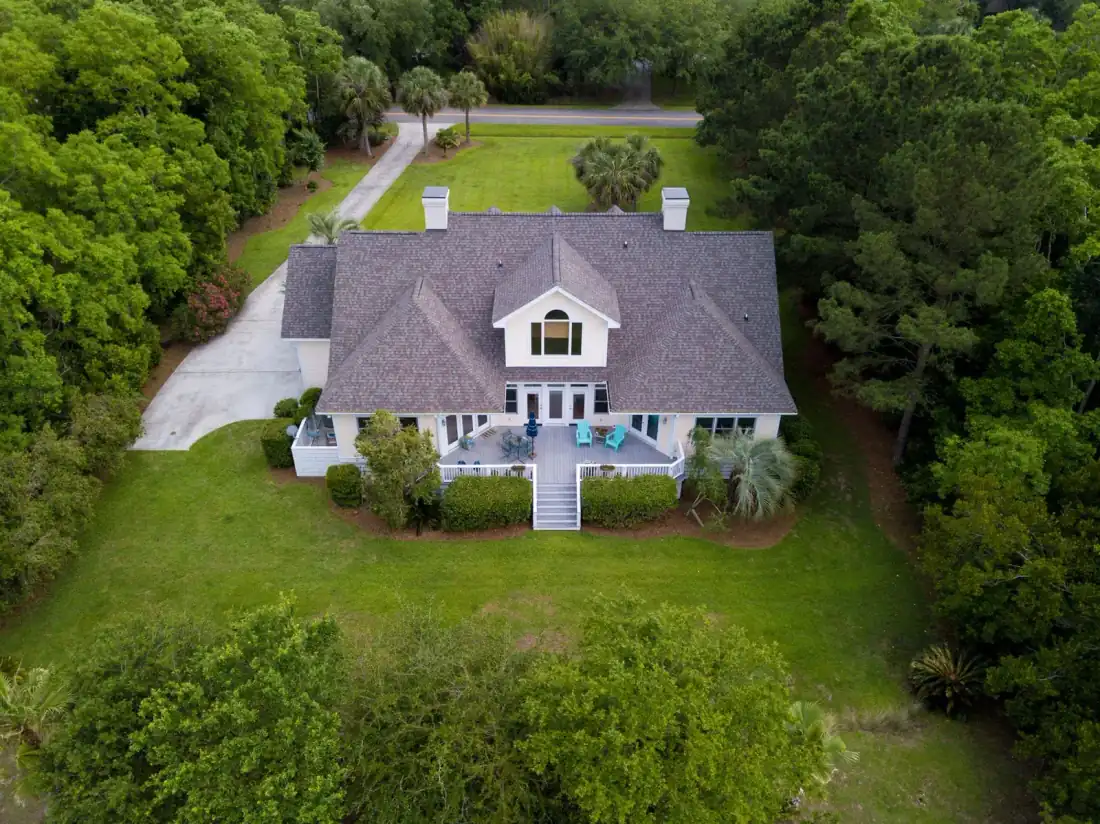
Every hurricane article written for Florida homeowners describes a finished house. Design wind speed, impact rated openings, strapping schedules, roof to wall connectors. None of it describes the building sitting on your lot right now with trusses set, sheathing half on, and a stack of windows on the slab. That building has no wind rating at all, because the rating is a property of the completed load path and the load path is not complete. This is the guide for that window: what an active build in Hernando, Pasco, or Citrus County is actually exposed to, what your insurance does and does not do about it, and the sequence that matters in the five days before landfall.
A House Under Construction Is Not the House the Code Protects
Every conversation about hurricanes and Florida homes is a conversation about finished houses. Design wind speed, wind borne debris regions, impact rated openings, strapping schedules. All of it describes a building that is complete, inspected, and closed up.
A house at frame stage is none of those things, and this is the single most misunderstood fact in residential construction here. The wind resistance in your plans is not a property of the lumber. It is a property of the completed assembly. Roof sheathing transfers load to the trusses, trusses to the top plate through the connectors, top plate down through the studs, studs to the sill, sill to the foundation through the anchor bolts. Break that chain anywhere and the number on the plans stops describing your building.
At frame stage the chain is deliberately incomplete. Sheathing may be partial. Straps may be installed but the diaphragm that makes them work is not closed. Interior walls that will eventually brace the structure are studs in the air. The house that is engineered for 130 to 140 mph is, that afternoon, a structure with no published rating at all.
This is not a reason to panic about building in Florida. Thousands of homes go up here every year through hurricane season without incident. It is a reason to treat the construction window as its own risk problem with its own plan, separate from the wind code work described in our guide to the Florida hurricane wind code for new homes.
Nobody in Hernando County Will Force You to Have a Plan
If you build in Miami-Dade, the county requires a hurricane preparedness plan for your site and requires it to be physically available on the jobsite for inspection. Section 8-16 of the Miami-Dade County Code spells out what happens when the National Weather Service issues a tropical storm or hurricane warning: construction shacks, equipment, stored materials, roofing tiles, insulation board, temporary electric service poles, temporary toilets, trash, and forms all have to be removed or fastened down. Glass areas get protected. Cranes get specific treatment, down to lubricating tower crane turntables in advance and setting them in weathervane position, retracting hydraulic booms, laying down fixed booms, stripping rigging from the hoist block, and disconnecting power at the base.
That level of prescription does not exist in Hernando, Pasco, or Citrus County. There is no equivalent local ordinance that will send an inspector to your lot to check whether your plan is posted.
So the honest version of this article opens with the thing most articles bury: on a Nature Coast build, the discipline is voluntary. Nothing in the permit process makes you do it.
What does make you do it is money. Your builder's risk policy, your contract, and the arithmetic of a partial loss at frame stage are the enforcement mechanism, and they are considerably less forgiving than a building inspector would be. The Miami-Dade list is still worth reading, not because it binds you, but because it is the most complete published checklist of what a jurisdiction that takes this seriously actually expects.
What Builder's Risk Covers, and the Endorsement That Is Not Automatic
The insurance product that covers a house during construction is builder's risk, sometimes written as course of construction. Homeowners frequently assume it works like a homeowner's policy. It does not.
- Wind from a named storm is usually excluded from the base form: hurricane and flood are the two perils most commonly carved out of a Florida builder's risk policy. The base policy will typically respond to a garden variety thunderstorm and pointedly not respond to a hurricane.
- Coverage is bought back by endorsement: a named storm or windstorm endorsement restores coverage for wind and wind driven rain from a system named by the National Hurricane Center. If nobody added it, it is not there.
- Storm surge is flood, not wind: water pushed inland by a hurricane is excluded as flood and requires a separate flood policy. On a Hernando Beach or Hudson lot this is not a technicality, it is the main exposure.
- Premiums run roughly $1.20 to $4.50 per $100 of insurable construction value, with most residential projects landing between $1,200 and $7,500 annually depending on value, location, and construction type.
The question to ask your builder is not whether the project is insured. It is whether the policy carries a named storm endorsement, who the named insured is, what the policy period runs through, and what happens if the build runs long. A policy that expires in month ten of a fourteen month schedule is a coverage gap sitting in the middle of hurricane season, and schedules do run long, as our breakdown of how long it takes to build a house in Florida lays out.
The Deductible Is a Percentage, and That Changes the Math
Here is the number that surprises owners after a storm.
Named storm deductibles on Florida property policies are not flat dollar amounts. They are commonly 2 to 5 percent of total insured value, and in the highest risk counties the range can reach 10 percent. The deductible applies to the insured value of the project, not to the size of the damage.
Run it on a $450,000 build. At a 2 percent named storm deductible, you absorb $9,000 before the policy pays anything. At 5 percent, you absorb $22,500.
Now think about what a Category 1 or a strong tropical storm actually does to a framed but not dried in house. It is rarely a total loss. It is sheathing peeled off two elevations, a section of trusses racked out of plumb, saturated lumber, a ruined stack of drywall that was delivered Thursday, and two weeks of schedule. Call it $18,000 of damage on a good day.
At a 5 percent deductible on a $450,000 build, that entire loss falls below the deductible. You are fully insured and you pay all of it. This is the mechanism that turns preparation from a nice-to-have into the highest return hour of work on the project. Most construction stage storm damage lands in the band where the deductible eats the claim, which means the money you save by preventing damage is real money and the money you expected insurance to hand you often is not.
Loose Material Is the Weapon, Not the Wind
The wind does not usually destroy a framed house by pushing on it. It destroys the house next door by throwing your jobsite at it, and it destroys your house by throwing the neighbor's jobsite at you.
A sheet of plywood is a flat plate with enormous surface area and almost no mass. Half inch OSB weighs around 46 pounds and presents 32 square feet to the wind. At tropical storm force it becomes a projectile with more than enough energy to punch through unprotected sheathing and window glass. The same is true of a stack of Hardie board, a bundle of shingles, a sheet of house wrap, and a fifty gallon drum of debris.
The practical rule on a site is simple to state and hard to enforce at 4 p.m. on a Friday: nothing stays loose. Every material either goes inside a closed container, gets banded and strapped to something structural, gets laid flat and weighted, or leaves the site. The categories that get missed most often are the ones nobody thinks of as material:
- Temporary fencing: chain link panels in weighted feet are among the first things to walk. Panels should be removed or the mesh cut loose so the frames do not act as sails.
- Portable toilets: anchored, strapped to a fixed object, or hauled off. A tipped unit is a biohazard cleanup on top of a storm cleanup.
- Dumpsters and debris: emptied and hauled before the event, not after. A full open top dumpster is a bin of projectiles.
- Job trailers and storage containers: anchored, or emptied of anything that becomes airborne if the doors fail.
- Formwork and shoring: stripped and stacked flat if the pour allows, or braced if it does not.
- Temporary power poles: the service pole is both a wind target and a live electrical hazard. Coordinate with the utility rather than improvising.
Temporary Bracing Is a Real Standard, Not a Judgment Call
The most vulnerable structure on any residential site is a set of trusses that have been set but not permanently braced and sheathed.
The industry standard here is the Building Component Safety Information guide, BCSI, published jointly by the Truss Plate Institute and the Structural Building Components Association. BCSI-B2 covers truss installation and temporary restraint and bracing specifically. Its core teaching is that lateral restraint alone is not bracing. Rows of trusses tied together laterally without diagonal bracing move as a unit, and a unit that moves collapses as a unit. Crews have been killed by exactly this failure mode in ordinary weather, with no storm involved.
The relevance to hurricane season is that a truss package which is adequately braced for a normal work week is not necessarily braced for 60 mph gusts. When a warning is issued, the questions worth asking on site are whether diagonal bracing is installed in the planes BCSI calls for, whether ground bracing is still in place or was pulled early, whether gable ends are braced back into the structure rather than standing free, and whether partially installed sheathing has been either completed on a full plane or removed. A half sheathed roof plane can be worse than a bare one, because it gives the wind something to grab without giving the structure a completed diaphragm.
This is a conversation for your framing crew and your truss supplier, and it should happen at the start of the season rather than the morning a cone appears. Our construction management team runs this checklist as a standing item on active custom home builds from June through November.
The Sequence: What Happens at 120, 72, and 36 Hours
Preparation fails on timing more often than on knowledge. Everybody knows the plywood should be secured. The plywood does not get secured because the decision to stop production was made twelve hours too late, and by then the crew has gone home to prepare their own houses.
A workable sequence for a Nature Coast residential site looks like this:
- At the start of the season, not during a storm: confirm the builder's risk policy carries a named storm endorsement and note its expiration date. Photograph the entire site and every stored material package. Identify where materials will go and who has keys. Agree in writing who makes the shutdown call and at what trigger.
- 120 hours out, when the cone first includes the county: stop new material deliveries. This is the highest leverage single decision, because material that never arrived cannot become debris. Reschedule the drywall drop and the window delivery.
- 72 hours out: begin securing. Band and strap stored lumber and sheathing. Empty and remove dumpsters. Confirm bracing with the framing crew. Start the photo documentation pass, timestamped, from every elevation and every interior space.
- 36 hours out: final pass. Remove or drop temporary fencing. Anchor or remove trailers and portable toilets. Cut and disconnect what needs disconnecting with the utility. Secure the last of the small tools and fuel cans. Nobody should be doing physical work on a site inside a warning window, so this pass has to finish early.
- After the all clear: do not enter until the site is confirmed safe for downed lines and unstable structure. Photograph before touching anything. Notify the carrier in writing the same day, even before you know the extent.
The 120 hour delivery decision deserves its own emphasis because it is the one that costs the least and saves the most. A truckload of windows staged on a slab is a five figure loss waiting for a gust. A truckload of windows still at the supplier is a phone call.
The Documentation That Turns a Loss Into a Paid Claim
Two identical houses take identical damage. One owner is paid in six weeks and one argues for eight months. The difference is almost always what existed before the storm.
What a carrier needs to see, and what is nearly impossible to reconstruct after the fact:
- Timestamped pre-storm photographs of the whole site, including every elevation, the interior of each framed space, and every stack of stored material. Photograph the material packaging labels, because that is how you prove what was there.
- Delivery tickets and invoices for material on site, which establish both quantity and value of what was destroyed.
- A dated record of the preparation work performed, which rebuts the argument that the loss was worsened by failure to protect the property. Most policies carry a duty to protect property from further damage, and that duty attaches before the storm as well as after.
- Inspection records showing the stage of completion, which fixes the value at risk on the date of loss. A house that passed framing inspection on the fourth is a different claim than a house that had not.
- Written notice to the carrier, sent promptly and dated, before any repair or cleanup begins.
If the damage is significant enough to need reconstruction, that is a separate scope of work with its own permitting and its own sequencing, and it is worth engaging a contractor with a dedicated storm damage restoration practice rather than asking the framing crew to sort it out.
Who Eats the Delay: The Contract Language That Decides
Storm damage costs money twice. Once in materials and labor, and again in schedule.
Under the AIA A201-2017 General Conditions, the standard form used on many custom residential contracts, Section 8.3.1 provides that the contract time is extended for delays caused by adverse weather conditions documented in accordance with Section 15.1.6.2, or by other causes beyond the contractor's control. The critical words are documented and beyond the contractor's control. The burden falls on the contractor to show the weather was not reasonably anticipatable and that it actually affected scheduled work. A claim must be initiated within 21 days of the event.
Two consequences for an owner. First, a hurricane in September in Florida is not automatically unanticipatable weather. It is the most anticipatable thing on the calendar here, which is why a well drafted contract addresses named storms explicitly rather than leaning on the general adverse weather clause. Second, a time extension is not the same as money. Most forms extend the schedule without compensating the contractor for general conditions during the delay, and who absorbs those carrying costs is a negotiated term, not a default.
Read your contract before June, not after the storm. The clauses worth locating are the weather and force majeure provisions, the builder's risk requirements including who pays the deductible, the notice periods for claims, and any liquidated damages that a storm delay would otherwise trigger.
Stage by Stage: What Is Actually at Risk
The right preparation depends heavily on where the house is, and the risk profile is not linear.
- Site work and foundation: the structure itself is nearly invulnerable. The exposure is erosion, a flooded excavation, silt fence failure and the stormwater violation that follows, and forms that have not been stripped. Low dollar risk, real regulatory risk.
- Framed, not sheathed: the worst stage on the entire schedule. Walls are up, the diaphragm is not closed, trusses may be set with temporary bracing only, and there is nothing to resist racking. If a named storm is forecast and the house is here, the honest answer is often to stop and brace rather than to race ahead.
- Sheathed and dried in: a substantial improvement. The load path is largely continuous, the building sheds water, and interior materials can be stored inside. This is the milestone worth pushing for ahead of a forecast if it is genuinely reachable, and worth abandoning if it is not.
- Windows and doors installed, not yet finished: strong structurally, but openings are the vulnerability. An unprotected opening that fails pressurizes the building and can lift the roof from the inside. Impact rated units or temporary protection matter here even though the house is not occupied.
- Interior finish: structurally sound and financially the most exposed, because the value inside the building is now enormous. Cabinets, flooring, and trim on site represent a large share of the contract value and none of it survives a wet ceiling.
That third bullet is worth sitting with. Getting to dried in is the single most valuable schedule move in Florida construction, which is why experienced builders on the Nature Coast try to sequence framing and dry in outside the September peak whenever the calendar allows. It is also why a build that starts in April is a different risk than one that starts in July, even with identical plans.
What the 2026 and 2027 Seasons Look Like
For the 2026 Atlantic season, NOAA forecast below normal activity, initially calling for 8 to 14 named storms, 3 to 6 hurricanes, and 1 to 3 major hurricanes, with a 55 percent chance of a below normal season. Later in the season NOAA raised the probability of below normal activity to 75 percent. Colorado State University also revised downward through the year, ending well below its early estimates. The stated driver in both cases is El Nino development, which strengthens upper level winds across the Caribbean and tropical Atlantic and increases the vertical wind shear that tears developing systems apart.
Two cautions about acting on that. A below normal season is a statement about the count of storms, not about where they go. The 1992 season produced six named storms and one of them was Andrew. And a seasonal forecast tells a builder nothing about the specific week their trusses are standing unsheathed.
The planning value of a quiet forecast is real but narrow. It is a reason to schedule aggressively and to attempt a dry in window you might otherwise avoid. It is not a reason to skip the endorsement, skip the photographs, or leave the plywood loose.
The Short Version
A house under construction has none of the wind resistance the finished house is engineered for, because the load path is not complete. No local ordinance in Hernando, Pasco, or Citrus County requires a site hurricane plan, so the discipline is entirely voluntary and entirely economic. Builder's risk usually excludes named storm wind until an endorsement buys it back, and the deductible is a percentage of insured value that frequently exceeds the size of a realistic construction stage loss. Loose material is the dominant hazard, delivery scheduling is the cheapest control, and dried in is the milestone that changes everything.
If you are building or planning a home anywhere in Hernando County, Hudson, or Citrus County and you want the season built into the schedule rather than bolted on in September, call us at (352) 710-5455. Protech Construction Services is a licensed Florida general contractor, CBC1268979, based at 9035 Jayson Dr, Brooksville, FL 34613.
FAQ
Frequently Asked Questions
Does Florida require a hurricane preparedness plan on a construction site?
+
Is my house under construction covered for hurricane damage?
+
How much is a named storm deductible on builder's risk?
+
What is the most dangerous stage of construction during a hurricane?
+
What should be done first when a storm is forecast?
+
Who pays for the delay when a hurricane stops the job?
+
Keep Reading
More articles from the Protech Construction blog
Adding a Second Story in Florida: Why Foundation and Wind Load Make It Cost More Than You Think
Adding a second story in Florida often costs more per square foot than building out or even building new. Here is what drives the price, from footing reinforcement and hurricane wind load to the FEMA 50 percent rule, with 2026 planning ranges.
Read ArticleBarndominiums in Florida: What a Post-Frame or Block Barndo Really Costs to Build to Code in 2027
A finished barndominium in Florida typically costs about $130 to $200 per square foot before land, well, septic and fees. Here is how shell and finished pricing differ, what Florida wind code adds and a sample budget for a rural Hernando lot.
Read Article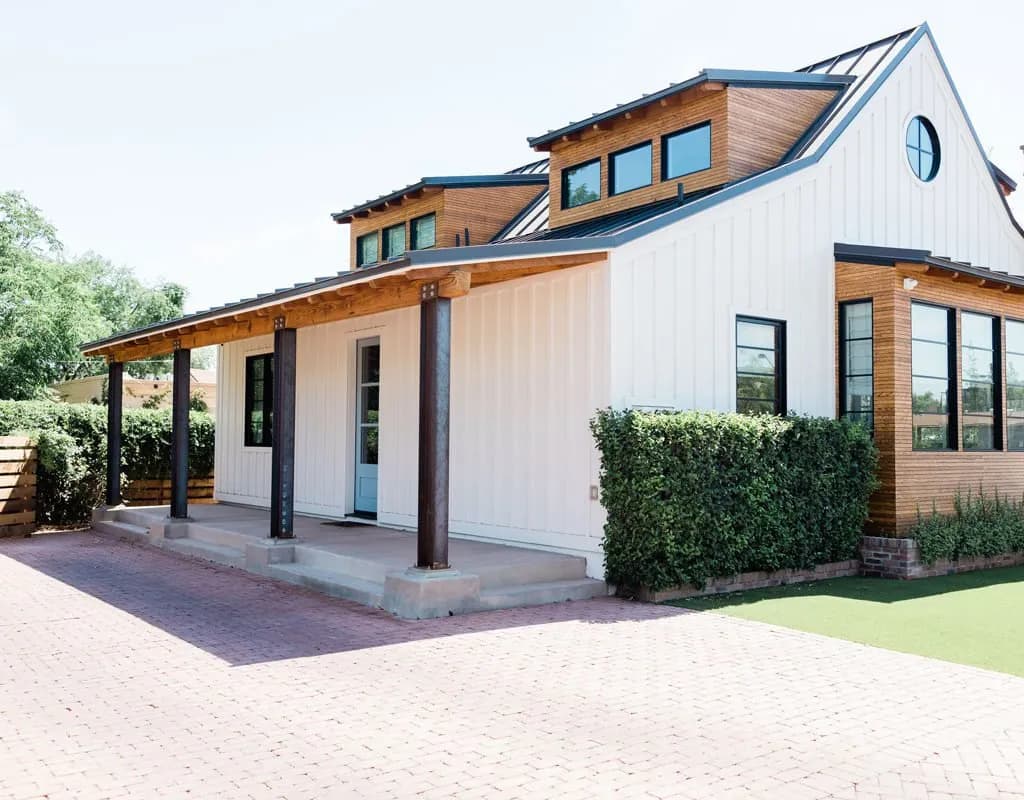
Impact Windows vs Hurricane Shutters in Florida: Cost, Insurance Credits and 10-Year Value
Impact windows and hurricane shutters can both meet Florida code and earn the same insurance credit. Here is how they compare on 2026 cost, daily convenience, storm performance and 10-year value for a new build or remodel.
Read ArticleReady to Build?
Get your free evaluation today.
No-pressure consultation. We serve Hernando, Pasco, and Citrus counties. Call us now or request a visit online.